Komal Saim April 28, 2026


Komal Saim April 28, 2026

The vast majority of marketers will experiment with AI tools by entering a prompt, such as analyzing my webpage, and hoping to immediately see the results. In their place, they frequently receive generic prescriptions stale, general and hard to implement in practice. The problem is often not the tool, but rather a lack of clarity of approach to the prompt.
Answers to this question require improved inputs, set goals and a systematic procedure that converts knowledge into performance that enhances the performance of SEO. Claude AI can be a formidable ally, particularly in the case of audits, key-word research, content planning and page optimization, when used appropriately.
Expanding on the concepts of 8 Powerful Ways to Use Claude to Optimize Your Website Content, theory is as important as the practical implementation. Real-life learning, such as the one that Arsh Infosystems practices, might assist you in refining your abilities and implementing AI-driven SEO in a more efficient way.
The given guide is dedicated to the strategic partnership, rather than a shortcut tool, of Claude AI.

The majority of the AI-created SEO reports are insufficient due to one basic factor: the input is too ambiguous.
When a user enters the query of analyzing my site, the AI does not have much to base on. It is not aware of what you want to accomplish with your business, who to reach, your competitors, your current rankings, and which pages are not performing well. Under these kinds of limited direction, the output is naturally broad and generic.
You have likely heard reports to the effect that things such as:
Not a single one of these suggestions is bad- but they are not deep, prioritized and clear. They do not inform you what you need to fix first, why it is important and how it affects your development. They are therefore very difficult to take action upon and are usually disregarded.
An efficient SEO report is more than a superficial guide. It must explicitly respond to:
This level of understanding makes data directional. It makes you concentrate on the activities that do shift the ranking, traffic and conversions.
Where Claude AI Becomes Potent
This is where such tools as Claude AI are really shining out- but not when it is not done in a strategic approach. Claude can no longer give one-size-fits-all suggestions, but with the right prompts, context, and objectives, he can provide focused and actionable SEO insights that are aligned to real business objectives. The disparity is not the tool, but the direction you take it.
Claude AI is unique in that it is able to analyze the context in depth, compare data, identify patterns, and convert them into recommendations in a structured format. It does not substitute SEO professionals, it just enables them to be quicker and make decisions that are more informed.
Properly applied, it will not seem like a tool but rather a strategic partner that bridges data and action.
Claude AI is particularly beneficial in the spheres where the analysis and priority of SEO have to be conducted:
Technical SEO Reviews: Translates complicated audit data into prioritized action plans.
Gap Analysis Content: Helps to contrast your pages with other competitors in order to identify the gaps.
Keyword Clustering: Clustering is done not only according to the number of keywords, but also according to the intention of the user.
On-Page Optimization: Optimizes content to make it understandable, organized, and searchable.
AI Search Readiness: Assists content to improve in answer engines and conversational search.
Quality is all about quality and what you give is what you get. When you give minimal context, Claude will draw conclusions and this will give generic knowledge. However, it is able to provide strategic suggestions when fed structured, real data.
What to Include in your Prompt.
Example Prompt
Be an SEO specialist. Research this site in terms of technical SEO, content quality, keyword targeting, internal linking, competitors, AEO and GEO. Find shortcomings, suggest solutions, and set priorities.
Why this is effective: It provides direction. You are not provided with general tips but a systematic review in accordance with actual SEO.
There are a lot of users that leave after a single prompt. Most of the value is lost there. Good SEO involves follow-up questions that explore further the potentials and areas of weakness.
Competitor Research with Claude AI.
Ask:
Compare this site with the best of its competitors. In what areas do they excel in content, key word coverage and structure?
This can reveal:
Ask:
Find missing key words groups and cluster them based on purpose.
Claude is able to sort out keywords into:
This will make your content a much more strategic and user-behavior aligned planning.
Step 3: AI-Driven Search Optimization.
There is a change in search behavior. People are more and more using answers provided by AI rather than looking through the conventional search engine results.
This change has taken SEO nearer to:
Ask Claude AI
How come this site is on AI-generated answers? Make recommendations about structure, examples and clarity.
What Claude AI normally suggests.
We could write:
SEO is significant in websites.
Write:
SEO enables sites to gain more organic visibility, get qualified traffic and less reliance on paid advertisements.
This makes your content more understandable, not only to users, but also to AI systems that interpret your content.
Knowledge is not enough to enhance rankings, it is implementation. Claude AI is the most powerful when you employ it to refine and apply changes to your real content.
Rewrite Existing Pages
Ask:
Reorganize this page into answer-first, snippet-friendly, AI-optimized form.
Improve Blog Content
Use Claude AI to:
Ask:
“Recommend internal links in the current blog posts to this service page.
Create High-CTR Metadata
Ask:
Write 10 title tags and meta descriptions that are search engine friendly and maximize the number of clicks.
The key to successfully using AI in SEO is based on the right questions and the right manner of asking them. Structured frameworks can make you get clear, actionable insights that are consistent with actual business objectives, as opposed to vague prompts.
The following are four fined prompt structures that you can implement to obtain more valuable results with tools such as Claude AI:
Apply when: You need a big picture view of your site.
Refined Prompt:
Become an SEO specialist and conduct a full audit of this site. Study technical SEO, content quality, targeted keywords, internal links, positioning, AEO, and GEO preparedness. Find out the main gaps, discuss their effects, and plan actions depending on potential SEO improvement.
Why this works:
It does not only demand issues, but it demands impact and priority which makes the output much more useful.
Apply in cases where: You are interested in finding out the opportunities that you have missed as compared to competitors.
Refined Prompt:
Compare the best three competitors of the given site. Find out the key areas lacking in terms of keywords, content, and areas that the site does not cover at the moment. Organize results by search purpose and provide content opportunities to enhance topical authority.
Why this works:
It refocuses the generic comparison to strategic expansion of the content.
Apply it in cases when: You would like your content to be included in AI-generated responses.
Refined Prompt:
Test the performance of this site in the search results generated by AI. Check its readiness to be shown in AEO and GEO. Recommend improvements in structure of the content, the answer-first formatting, headings, examples, and depth to be more visible in the search results generated by AI.
Why this works:
It integrates your SEO plan with the contemporary search behavior, rather than the conventional rankings.
Apply in the situation where: You wish to enhance an existing page to achieve better positions and readability.
Refined Prompt:
The message on this page has to be rewritten to enhance the SEO performance, to be answer-first, featured snippets, readability, better structure with appropriate headings and topical relevance using semantic keywords.
Why this works: It is a combination of SEO + user experience + AI search optimization in a single clear teaching.
To realize the actual effect of Claude AI, we would consider a real-life situation.
Suppose a training institute wishes to raise the awareness of digital marketing courses in Pune. It is not merely an increased flow of traffic but rather a targeted audience with a purpose.
Weak Approach
Prompt:
“Analyze my website.”
Typical Output:
These recommendations are not incorrect- they are just too general. No direction, no priority and no relation to business objectives.
Strong Approach
Objective-Based Prompt:
Review my Web site to determine what digital marketing training can grow in Pune. Compare it with the top three competitors. Recommend missing pages, keyword sets, and content specific suggestions based on the search intent.
Claude AI can provide actionable insights, such as:
Enhance internal connection with blog posts.
Include comparison content (e.g. course vs competitors)
AI search is optimized in terms of FAQ and answer-first content.
This has ceased to be a generic counsel; it is a strategic roadmap that you can implement.
1. Using One-Line Prompts
Brief questions result in superficial answers. The more context you give the better is the output.
2. Ignoring Competitors
SEO is all relative. You do not simply have to get better, you must get better there.
3. Only Concentrating on Keywords
Search intent is more important than the volume of the key words. Irrelevant ranking will not lead to conversions.
4. Skipping Execution
Traffic does not come as a result of insight alone. Findings are operational and uniform.
5. Not Updating Content
The old pages become irrelevant as time goes by. Updating of rankings and authority is maintained by regular updates.
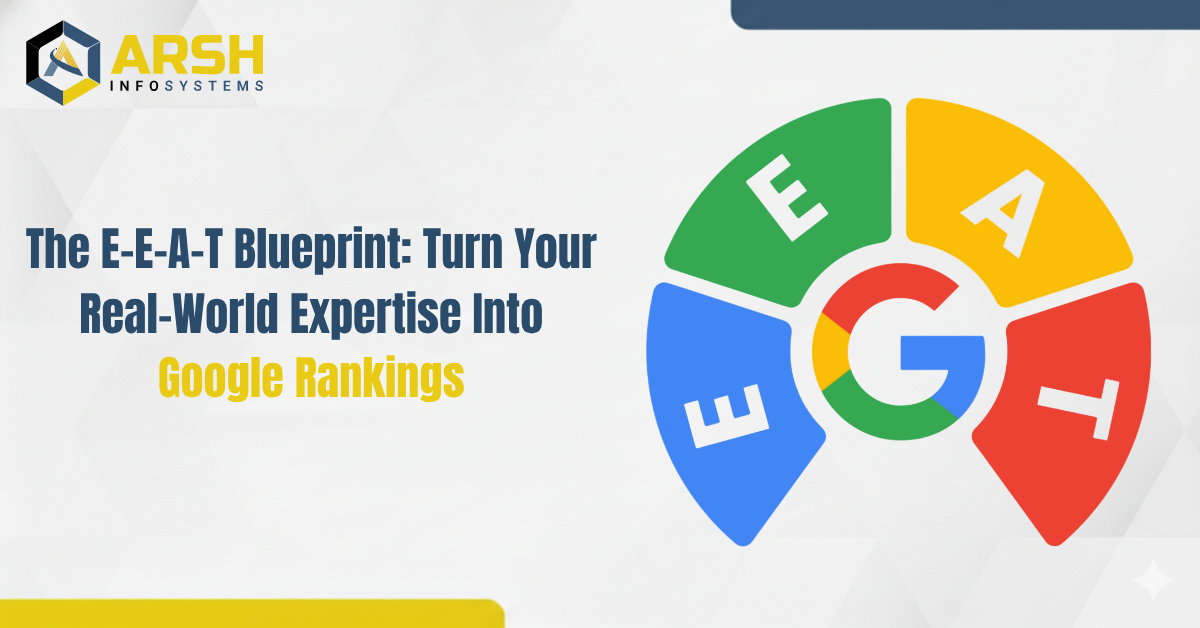
Search engines do not only consider keywords, they consider credibility. Enhancing your E-E-A-T (Experience, Expertise, Authoritativeness, Trustworthiness) will make your content more noticeable, higher-ranking, and more converting.
Go beyond theory. Prove that you really did the job.
Ensure that your knowledge is easy to comprehend and implement.
Brand your content as a trustworthy source of information in your niche.
It is trust that transforms visitors to users or customers.
To enhance your content in order to make it stronger and more credible, use:
Read Also - The E-E-A-T Blueprint
Final thoughts
AI does not replace SEO, it is transforming the way SEO is practiced. Such tools as Claude AI can be potent, yet solely with an appropriate approach, context and purpose.
The gap between the average and high-performing SEO does not exist in the use of AI it exists in the use of it. Having clear prompts, knowledge of competitors, a well-structured execution, and constant optimization are what transform insights into tangible growth.
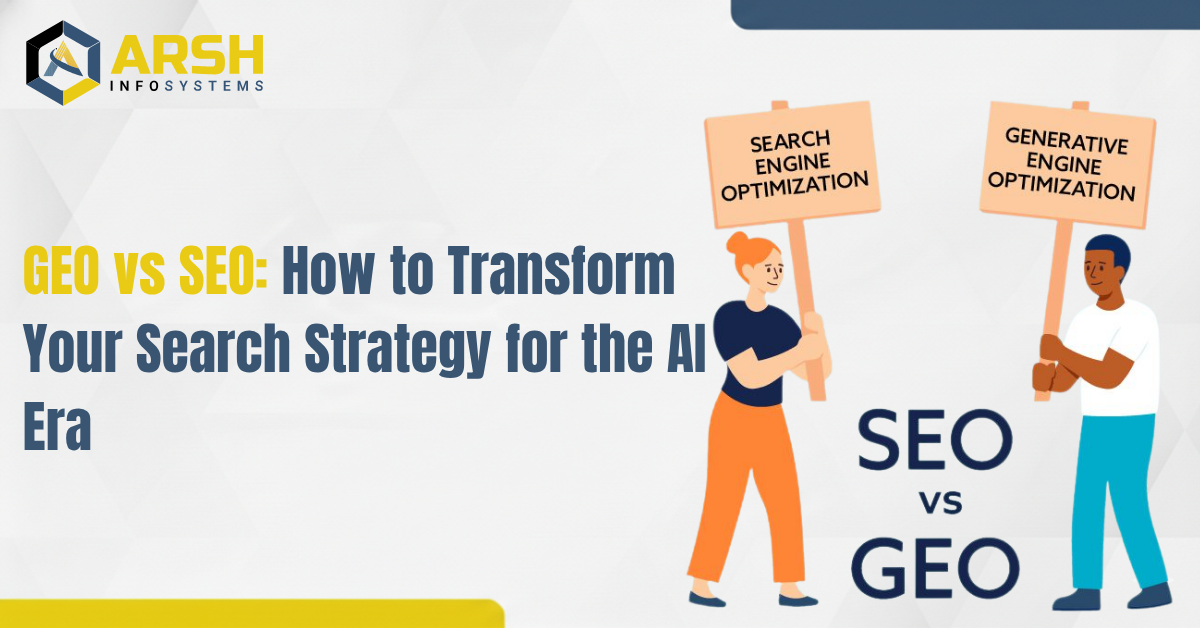
GEO, AEO, and E-E-A-T are not an option anymore because search is changing to AI-based results. The content should be more understandable, useful and should be structured around actual user intent, rather than keywords.
Copyright © 2026 All Rights Reserved By Arsh Infosystems.
Reviews On 
Years experience
Satisfied clients