Komal Saim Feb 23, 2026


Komal Saim Feb 23, 2026
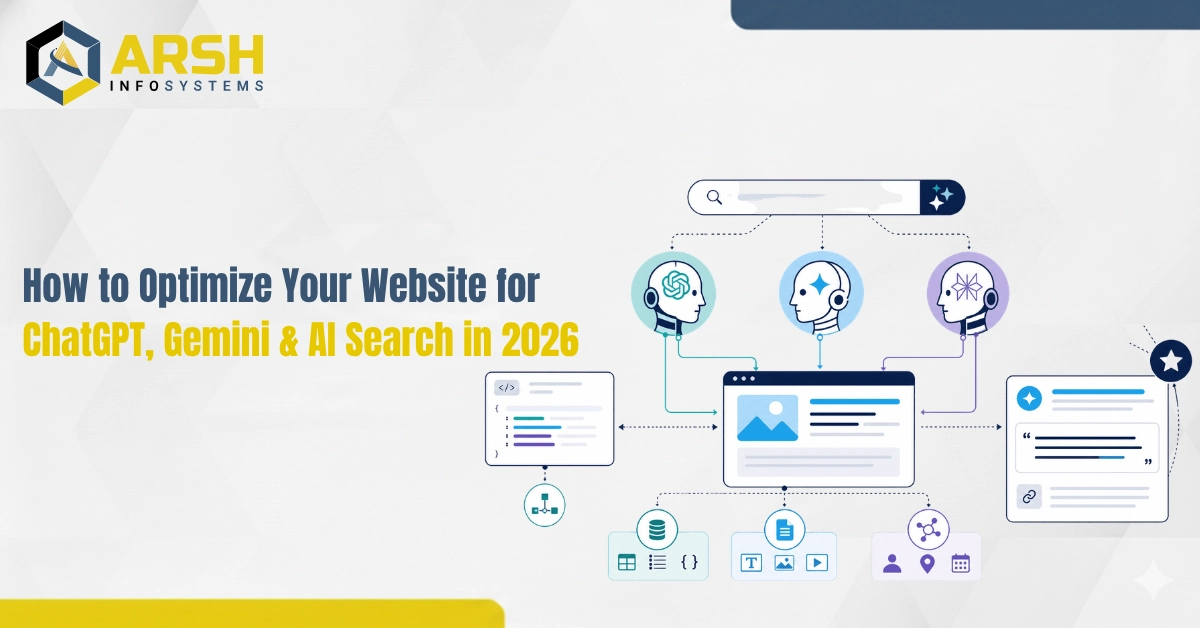
The question, How do I rank on ChatGPT? is likely to have been asked by you if you have worked in SEO or digital marketing. It is a logical statement, yet it is made on the basis of the comparison of two entirely different systems. Google is a search engine. It crawls web pages, indexes web pages and ranks them based on quantifiable variables such as keywords, backlinks, authority and user indications. The outputs are displayed in a ranked list and businesses are able to follow the rankings, clicks and traffic.
ChatGPT works differently. It does not spider the internet in real time, have a live index and show ranked search results. There is no place 1, no classic SERP and no direct traffic as perceived. ChatGPT does not rank the pages, instead proceeding to create reminiscent responses through its own recognition of patterns in the broadest possible amount of available information. When one poses a query, it does not bring up and organize web pages. It integrates experience and comes up with a systematic response. This is why ranking on ChatGPT is not about getting a high position it is about establishing authority, clarity, and permanence so that your ideas are more likely to be represented in AI-generated reactions in the long run.
First, it is crucial to eliminate the largest misconception.
ChatGPT is not run like Google. It does not go out there crawling the web, it does not have a live index of pages on sites, does not show pages in a ranked order. There is no search results page, no position tracking and no report based on ranking the keywords.
It doesn't crawl websites. It does not have live page index. It does not present a list of prioritized search results. There's no "position #1" or "page 2." No report on ranking of keywords.
Rather, ChatGPT creates responses which are presented in a pattern based on the big volumes of publicly available data that it has learned. It identifies themes, descriptions, general structures, and popular concepts. When one poses a question, it will draw on that knowledge learned and will shape a conversation answer.
The Real Process of Inclusion
These environments present a greater chance to establish your position, ideas, or expertise in the AI-generated responses when your brand is mentioned in the environment.
That is why such considerate content publication, participation in discussions of the masses, being mentioned, and stable power are more important than ever. It is not gambling around with an algorithm but it is about creating digital credibility at scale.
The Strategic Shift
That is a totally different way of thinking.
You are not only oriented to chasing keywords that are on their own, but rather you are oriented to clarity, authority, structured information, and consistency across reliable platforms. In the long term, such cues bring the likelihood of your brand, patterns, or knowledge becoming included in AI-driven responses.
TL;DR
ChatGPT does not index your site or provide results in an ordered fashion as Google does. It produces reactions to patterns that have been acquired through organized, reliable and ubiquitous material. The real meaning of ranking on ChatGPT is to make your brand mentioned more often, paraphrased, or reflected in the answers provided by AI in case users pose the relevant questions.
Why This is Important (Particularly to Indian Brands)
AI models are not necessarily an experimental tool anymore, they are becoming a regular aspect of research behaviour. In the mobile-first and fast paced markets such as India, users desire fast, summarised and accurate responses. Brands now compete across two parallel systems whether it is a startup in urban Gen Z or a mid-size B2B firm investigating AI visibility:
And the rules are different
Google incentivizes optimization of key-words, back-links and technical optimization. The priorities of AI platforms include structured knowledge, credible sources, brand authority and contextual relevancy. The second ecosystem is not fuelled by keyword stuffing, but by clarity, references and trust.
This transition is especially essential to the Indian brands. As of April 2025, India is already ranked among the most active countries in the use of ChatGPT in the world. Having a digitally native demographic, cheap access to data, and a fast rate of smartphone adoption, the adoption of AI-assisted searches is rising more rapidly than in most Western markets.
What does that mean?
When your brand does not feature in the AI-generated responses, you are lacking visibility at the first point of decision-making, when the users are evaluating the options, learning about solutions, and making initial impressions. Preferences can be formed even before they get to Google.
TL;DR
The most rapid adoption of AI search is in technologically advanced regions with high mobile populations such as India. Your brand does not compete on Google anymore, but also in AI-based search engines. In case you are not found in the AI answers, then you will go unnoticed at the most crucial point of customer research.
Although you cannot rank on ChatGPT in the same way that you do on Google, there are specific things that have a significant impact on whether or not your brand will be included in the results of an AI-generated response. The systems of AI are based on the patterns of authority, structure, repetition, and trust in the open web. This is what is really important:
It will not help to publish random, one-off blog posts. AI models tend to mention brands that portray profound and stable experiences in a particular niche.
Indicatively, an agency that continues to post quality content based on e-commerce SEO in India is more likely to be surfaced as opposed to a site that sometimes posts on SEO, branding, web design and finance in equal measure but lacks depth.
To build topical authority:
information when your site is presented as semantically deep and having linked knowledge.
AI is not an act of reading; it is an act of interpretation.
Paraphrased or cited in AI responses are more likely to come through as well-structured, question-based content.
Best practices include:
Organising information in such a manner that it directly provides the answer to popular questions.
For example:
Instead of writing:
Here is how we view brand positioning.
Write:
What is brand positioning and why should it be important to startups?
It is the format that users pose queries to AI tools, and thus more likely that your content will be matched with the intent to prompt.
AI models are trained based on repeated signals. When your brand is frequently mentioned, talked, or cited in various media, then your credibility goes up.
Focus on:
This is not just a matter of backlinks anymore. It has to do with visibility and contextual mentions. The more relevant conversations you are mentioned in, the more perceived authority you have over your brand.
It is about trust, however, both to Google and to AI systems that have been trained on reliable sources.
To strengthen E-E-A-T signals:
Articles that are supported by actual knowledge will be referred to more often than the pages that are anonymous, with keywords injected in them. AI systems prefer reality to drama.
AI software reacts to conversational questions. The easier the AI can match and use your content is the case that your content reflects the way people ask questions.
Common prompt examples:
When your subheadings and subsections directly answer such kinds of questions, then you will produce prompt, consistent materials.
Think like your audience. By creating content based on real-life questions that can be entered by users into AI services, users should write narrower articles instead of general articles. When your material just fits these prompts, you are more likely to be quoted or cited.
It is even possible to test this by inputting pertinent prompts to ChatGPT and noting the formatting of answers. Then also simplify your material to make it more thorough, concise and authoritative for that purpose.
The Bottom Line
No direct formula for ChatGPT ranking. Nonetheless, brands with topical authority, structured content, repeated mentions, high trust signals and prompt-aligned formatting are far more likely to be featured as part of the AI-generated responses.
Visibility in AI search is not positional.
It is all about being there, being believable and being understandable.
To be serious about knowing about your AI visibility, begin by trying it yourself.
Open ChatGPT (or any other AI assistant) and prompt in the form of:
Then observe:
This is not about imitating rivals. It concerns deconstructing patterns. When some of them are repeated, then probably they are developing a good topical authority, structured content and broader web mentions.
AI visibility leaves hints - you just have to investigate them.
To have a higher likelihood of appearing in AI-generated responses, work on the fundamentals - in the right way.
Here's a practical roadmap:
If you have not yet found a definite direction on what you want to write about, then start small but deep. A single authority page is more potent than ten of the generic blog posts. In search through AI, power outsmarts quantity.
TL;DR
Is It Worth It?
Yes, but you must go to it with the right expectations.
ChatGPT and other AI search engine optimization is not a fast traffic trick. You will not get immediate clicks as you do when you are ranked number one in Google.
What you will build is:
This is where AI technologies are gradually being used to formulate decisions even before users open Google. That is what makes them a member of the discovery journey - not a substitute, but an addition.
It is not about giving up on old-fashioned SEO. It is the question of increasing your presence footprint.
Final Thoughts
Search is no longer restricted to ranking at Google. By the emergence of AI-infused platforms, the next level of visibility is also the inclusion in the conversation answers that influence the first user decision. Although there is no way to place on ChatGPT in the traditional sense, you can control the probability of mentions of your brand through the accumulation of topical, structured, and credible signals on the Internet.
With AI tools entering the daily research behavior particularly in markets that are mobile-first such as India brands should consider not just keywords and traffic but rather think differently. AI visibility is not a growth hack, it is a long term credibility approach. The brands that are more clarity, expertise, and trust oriented, are those that are most likely to be mentioned in the AI generated responses in the future.
Copyright © 2026 All Rights Reserved By Arsh Infosystems.
Reviews On 
Years experience
Satisfied clients