AI for SEO in 2026: How to Use AI for Higher Google Rankings

Komal Saim Jan 13, 2026


AI for SEO in 2026: How to Use AI for Higher Google Rankings

SEO is no longer just about the keywords and backlinks, but also about technical optimisation. With the further advancement of 2026, Artificial Intelligence has become the heart of the mechanism by which Google interprets, ranks and provides content. New generation search engines do not rely solely on keyword matching. They do not; they consider user intent, context, real-world experience, engagement behaviour and trust signals in order to understand what content really deserves to be shown.

The transformation has entirely transformed the world of SEO. It has become a marketplace where quality, relevance and user satisfaction are more important than ever before, and business, marketers and owners of websites are battling. The algorithms that are powered by AI are intelligent enough to see valuable content and block out pages that have low quality of actually useful to the user. The change is a challenge to the brands that continue to use old-fashioned SEO methods- but also an opportunity to those that are ready to adjust.

At Arsh Infosystems, our experience has been the firsthand observation of how AI-based methods of SEO are transforming online growth. With the integration of the latest AI technologies and the traditional basics of SEO, companies can observe their audience, produce valuable content and be in line with the changing ranking algorithms at Google. By mastering the use of AI in SEO, people will not only be more highly ranked than their competitors but also establish long-term power and credibility in their field. Conversely, the non-use of AI in SEO is likely to result in the loss of visibility and growth prospects.
How AI Is Changing SEO in 2026

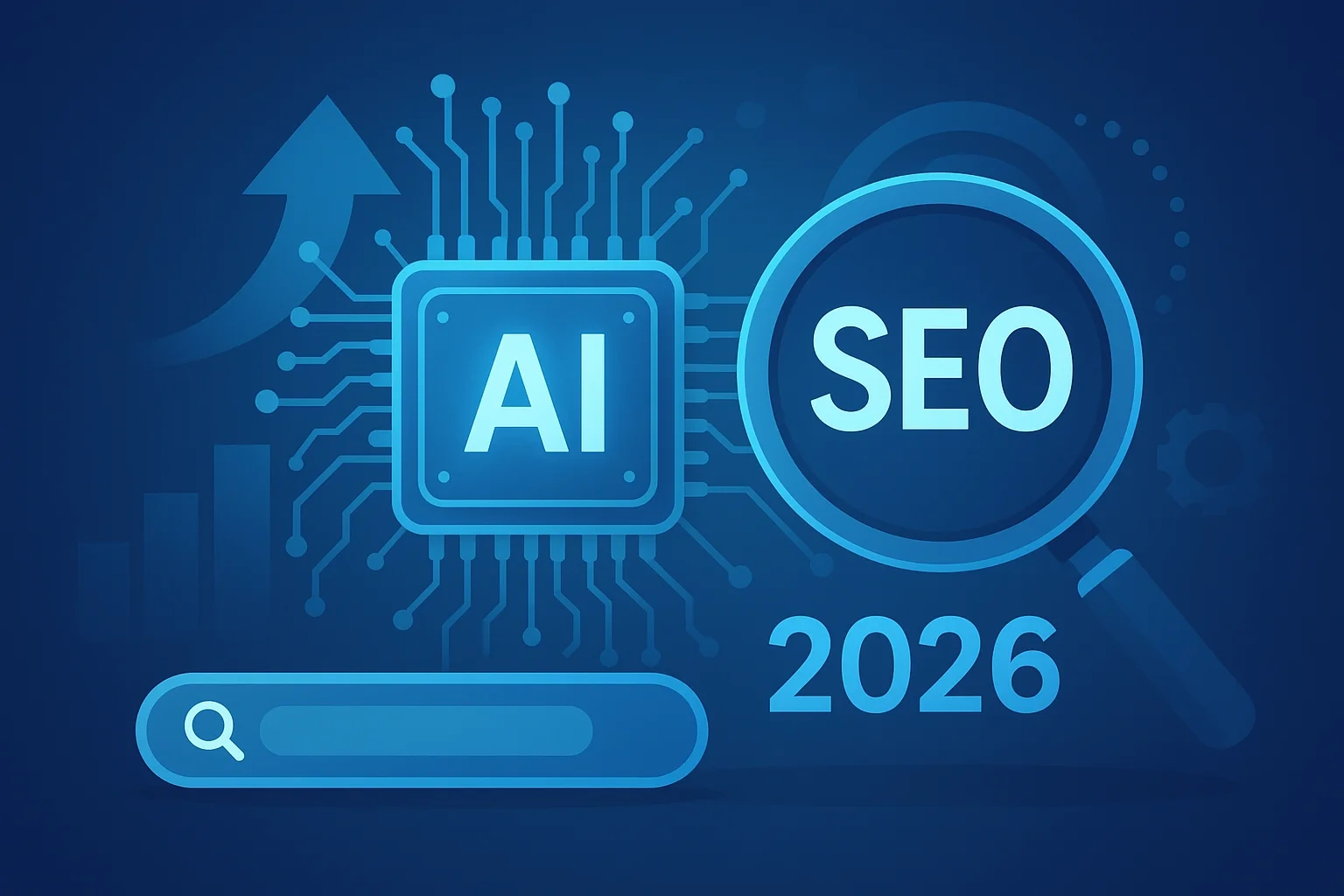
The world of SEO has changed radically in the recent years and in the year 2026, AI will be at the centre of this revolution. Google does not depend on mere algorithms of matching keywords to search queries anymore. The modern models of AI, such as RankBrain, BERT, MUM and Gemini, comprehend the material in a manner that resembles human cognition. This paradigm implies that recent search engines are more intent-driven, context-aware, relevant and quality-controlled rather than being keyword or backlink driven.

Search Is Now Intent-Driven

Artificial intelligence-based algorithms are capable of knowing what the users want.

They discuss various variables such as:

  • The purpose of the search: The purpose of a search can be to obtain information, to compare products, or to be able to buy something.
  • Context of query: AI takes into account the context of the words, such as location, device and past searches.
  • Search behavioural patterns: Algorithms monitor the way users behave on search outcomes in order to identify relevance.
  • Engagement indicators: Time spent on a page, scroll depth, clicks, and bounce rate are some of the metrics that demonstrate whether the content is really useful.

This attention to intent implies that the ability to rank based on the act of stuffing keywords in websites is no longer possible. The content should address actual issues, respond eloquently, and be beneficial to the readers.

A Quality Beats a Quantity of Content

By 2026, AI will be very competent in differentiating the low-value content and the genuinely useful content. It can identify:

  • Light or duplicate content that has little or nothing to offer the user.
  • The content created by AI and having no significant insights, potentially sounds unnatural or uninvolved.
  • Data that is over-optimised, i.e. focuses more on the keywords rather than readability and clarity.

AI Promotes smarter search engine tactics

As AI takes over search rankings, companies must change their strategy of search engine optimisation.

This includes:

  • Learning how to semantically search: Building content on topics, not single words.
  • Seizing the power of data: Intelligent insights, Trends and gaps analysis and competitor strategy analysis using AI tools.
  • Enhancing user experience: Makes the site faster, easier to navigate and access, which AI has taken into account to rank.

AI-Powered SEO Strategies for 2026

1. Artificial Intelligence SEO Keyword Research

Conventional keyword analysis was concerned primarily with the volume of search and competition. By 2026, keyword research will have become much more tactical and targeted by AI. Contemporary AI applications do not simply show a list of keywords, as they comprehend the purpose of the user and predict new trends, giving marketers an opportunity to stay ahead of the competition.

AI can help you:

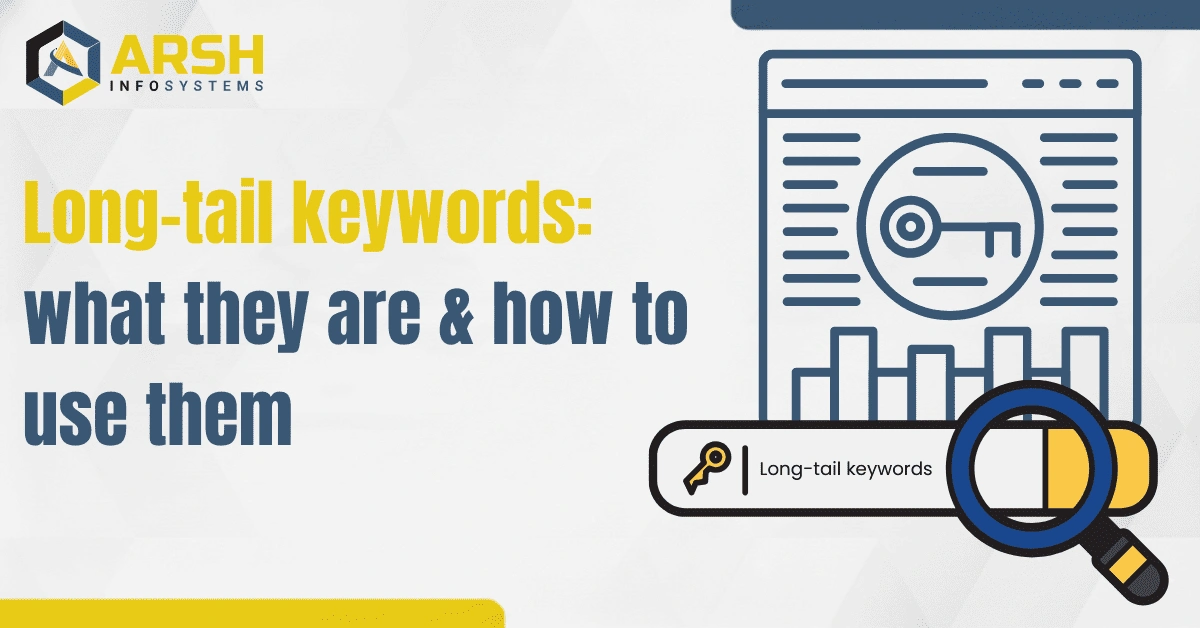
  • Determine long-tail, conversational queries: Customers are now making natural language searches (voice search, particularly). AI can propose the phrases that people in reality use in search.
  • Find semantic keywords and popular topics: AI relates similar terms, thus assisting you in addressing a topic exhaustively and building an authoritative voice.
  • Identify spotting trends and seasonality in search: Predictive AI is used to detect the search data and propose the topics before they turn into highly competitive ones.

2. Content Optimisation using Artificial Intelligence

AI has revolutionised the sphere of content production and optimisation. It neither replaces human writers nor enhances the information in areas of quality, relevance and organisation.

AI can help you:

  • Arranged content with the right headings: Proper headings make the content readable and enable search engines to establish the level of organisation of information.
  • Know what you are lacking: AI tools can compare what your competitor has written and what the user is searching for to make sure that you cover all aspects.
  • Automatic metadata and schema: AI can create meta titles, descriptions and structured data markup in the rich results automatically and can be seen more prominently in search snippets.
  • Make it clearer and more interesting: AI decodes the depth of sentence structure, paragraphs and flow of information to streamline, therefore, make the content easier to read.

3. AI in Technical SEO

Technical SEO is still the cornerstone of the performance of the site, and now it is more active and data-oriented with the help of AI. With the help of AI, one can detect problems that could have been difficult to notice manually very quickly.

AI applications include:

  • Discovering crawl failures and indexing problems: AI software performs an automatic search of your site in search of broken links, missing pages or improper redirects.
  • Tracking Core Web Vitals: Google ranking metrics, Largest Contentful Paint (LCP), Interaction to Next Paint (INP), and Cumulative Layout Shift (CLS) can be tracked in real-time and the AI can offer remedies to any troubles.
  • Forecasting issues with SEO: AI has the potential to predict the future occurrence of ranking losses based on trends, content changes, and anti-competitive activity and then act proactively.

4. AI-Enhanced Link Building

AI makes link building in 2026 more strategic and precise. Search engines do not favour quantity but rather quality and relevance of information and AI can guide you on the most suitable opportunities.

AI can help you:

  • Examine rival backlinks: The AI will assess the rival websites to determine which ones are attracting traffic and authority.
  • Check the quality of the monitor links: AI is able to draw your attention to spammy, broken or unhealthy backlinks, which will allow you to have a healthy backlink profile.
  • Predict link value: AI predicts the linkages with the highest authority and SEO value depending on the domain relevance, traffic and engagement.
  • Automatize outreach: AI will be able to propose other websites to publish and develop individual outreach email templates more efficiently.

5. How AI Improves ROI in SEO

AI does not just simplify and speed up SEO, but it directly improves the payback (ROI) through the improvement of efficiency, costs and outcomes.


Here's how:

1. Time-Saving Automation

The automation of repetitive and time-consuming processes provided by AI allows SEO specialists a chance to work on strategy and innovation.

  • Optimisation of content: AI-based tools can suggest meta tags, headings, internal links, and additions to the content.
  • Site audits: Broken links and technical analysis: The AI can crawl, find, and perform site audits in a better and more efficient way.
  • Key-word research: Key-word maps can be developed in a few minutes using AI, with no additional hours of manual research.

2. Data-Driven Decisions

AI can analyze high amounts of information in real-time, providing actionable information that would otherwise require humans considerable time to determine.

  • Competitor analysis: Start to know which keywords, types of content and backlinks are working to help competitors to rank.
  • Trend prediction: AI can forecast the shifts in user behaviour or the emergence of new trends in searches before it is too late and the competition becomes extremely intense.

  • Tracking performance: Pay attention to which pages or keywords or campaigns are giving the best ROI and you will need to re-strategise the approaches.

Greater Interactions and Sales

AI will help websites to match content and user motive, as well as to improve the rate of user engagement and the rate of conversion.

  • Personal content suggestions: AI can suggest to the users of your site certain content that they will not spend as much time on.
  • Optimised UX: It is possible to apply AI to identify the sources of user friction in navigation, layout or content to improve the user experience.
  • Intent-based targeting: When there is a relationship between the content and the intention of the user to search (subscribe, buy or contact), then the user is more likely to do so.

Cost-Effective Scaling

  • The use of AI allows companies to expand SEO without spending in line with the growth.
  • Write several pages, blog posts or product descriptions effectively with the help of AI-based content tools.
  • Track hundreds or thousands of pages automatically, either with technical problems or with performance metrics.

Improved Accuracy and Minimal Errors

Manual SEO is vulnerable to errors such as broken links, missing meta tags and the same content is present, but AI mitigates these errors by:

  • Routine processes are always automated.
  • Indicating discrepancies or optimisation differences.
  • Proposing remedies based on real-time information.

6. Smarter Resource Allocation

AI aids in prioritising the important SEO activities.

  • Listen to those pages that can rank or convert.
  • As a rule, invest in campaigns with the best ROI.
  • Do not waste resources on content and low-value links.

7. Continuous Improvement

AI is learning and adjusting continuously, and the businesses are not left behind as Google's algorithm keeps changing.

  • Expect deterioration in future ranking and take preventive measures.
  • Maximise time and interest in performance data.

Conclusion

SEO 2026 is no longer fueled by guesswork and antiquated tricks; it is artificial intelligence-led, purpose-oriented and user-driven. Smart keyword research and content optimisation are only a few examples of how Artificial Intelligence is now crucial to securing a better position in Google. Companies that organise their SEO efforts in accordance with AI-powered ideas can provide superior user-experiences, enhanced engagement and organic expansion over the long term.

At Arsh Infosystems, we also think that the actual success of AI in SEO is the ability to integrate high-quality technology and human knowledge. Responsible and strategic use of AI can enable businesses to remain ahead of the changes in the algorithms, maximise their ROI and gain a sustainable authority within the industry.

Copyright © 2026 All Rights Reserved By Arsh Infosystems.