Komal Saim Jan 09, 2026


Komal Saim Jan 09, 2026
When it comes to growing your business online, appearing on search engines is not a decision anymore, but a necessity. The contemporary customer starts his or her purchasing cycle by entering Google and if your organisation is not listed, you will be leaving behind a huge potential. In this case, SEO (Search Engine Optimisation) and SEM (Search Engine Marketing) enter. These two strategies help in getting yourself visible within the search engines, but they work in different ways and are used to get different goals depending on what you want to accomplish, the amount of money you have and the duration.
It is our mission to help companies in Arsh Infosystems study and choose the right search marketing strategy, which is based on their needs. SEO is directed to be organised into organic visibility in the long run and deploy quality content and optimisation of the site, whereas SEM will deliver short-term success through paid advertisement. The ability to distinguish between SEO and SEM will allow you to make more effective marketing decisions, balance between immediate and long-term gains, and create a strategy that will bring a frequent flow of traffic and make your business a leader.
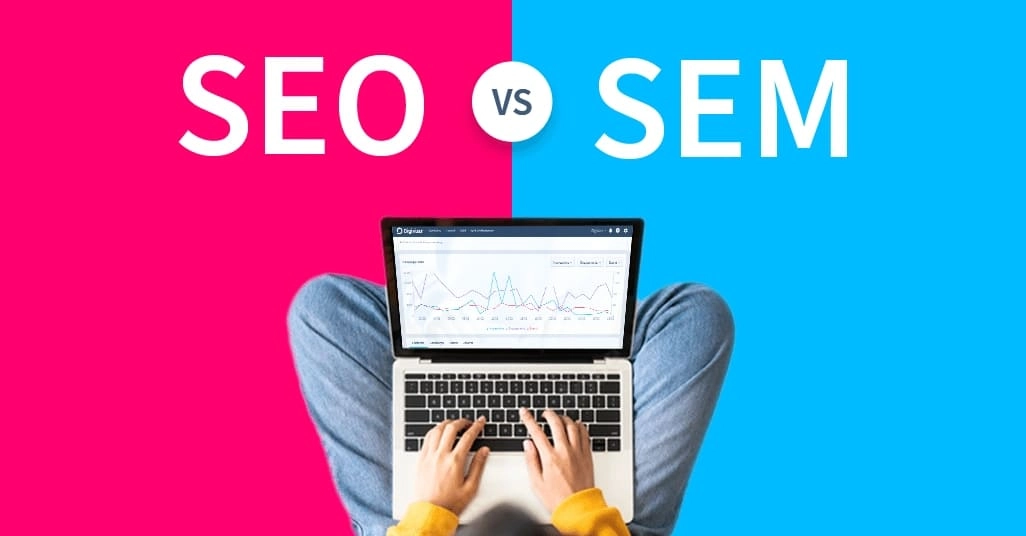
Search Engine Optimisation (SEO) refers to the act of enabling your website to be more accessible to search engines and their interpretation, as well as ranking. It assists your site to be listed in search results as users searchfor products and services, as well as information concerning your business. SEO is aimed at reaching out to the right audience at the right time.
The largest benefit of SEO is that organic traffic is generated. This implies that you do not need to pay each visitor who clicks on your site when he or she gets the search results. Nonetheless, SEO does not occur overnight. It entails regular optimisation, quality content and patience. These are activities that, in the long run, lead your website to become more authoritative, rise in ranking and provide long-term and stable traffic.
Keyword Research/ Content Optimisation
SEO relies on B2B keyword research. It involves having the proper words that your audience is searching and writing content that would answer their questions. In B2B SEO, the keywords are usually targeted to the decision-makers seeking solutions to their problems, services or information in the industry. In Local SEO, you apply location-specific keywords so that your business will be the one to show up in local searches. Optimised content will improve rankings and also user retention.
Google Find and Ranking
The reason behind some websites being ranked higher than others in Google could be explained by how search engines work. Google has a basic three-step system of discovering, storing and ranking web pages.
On-Page SEO :
On-page SEO is designed to optimise the performance of individual pages of a business. This involves composition of appealing meta titles and descriptions, proper heading structure, internal links and picture optimisation. These are some of the factors that help search engines to get to know more about your content and improve user experience, leading to more engagement and better ranking.
Technical SEO:
Technical SEO can make sure that the site runs well and that it is search engine-friendly. It involves enhancing the speed of the site, the site must be mobile-friendly, crawl and indexing must be corrected, the site must be on a secure https and the site structure should be in order. An effective website is technically sound, which makes it fast to load, usable across all types of devices, and enables search engines to access and index pages easily.
Off-Page SEO:
Off-page SEO is concerned with the creation of credibility and authority of your web page that is not on your web page. This is achieved by good backlinks, brand promotion and online referencing. Once valid websites refer to your content, the search engines consider your site more credible and hence it works to improve the ranking and general visibility.
SEO as a Growth Strategy in the long run :
SEO is a continuous process and not a one-time exercise. Although it is time-consuming to achieve the results, the long-term benefits are sustainable. When your site begins to rank highly, then it will be able to create continuous traffic and leads without constant advertising expenditures. SEO can assist businesses develop high-quality online presence and compete effectively in the search results on a long-term basis by continually enhancing their content, performance and authority.
SEM or Search Engine Marketing is a kind of digital marketing where paid advertisements are used in order to make a site more visible in search engines. Under SEM, companies will be able to post their advertisements at the top of search engines containing certain keywords. This is because advertisers do not pay until users have clicked on their ads and hence the model is commonly referred to as Pay-Per-Click (PPC). SEM would work particularly well when the target audience is actively searching and is willing to take a step in the direction of buying a product or service.
Paid Search Ads
Paid search adverts are either at the top or bottom of Google search results, and it offers an immediate exposure of your business. Google Ads allows businesses to use specific keywords to focus on their potential customers who are actively searching for their products or services on Google and produce direct traffic. Google Ads can be used in new campaigns in which one wants rapid traction and measurable outcomes.
Keyword Bidding
LinkedIn Ads provides the opportunity to target professionals by keyword and audience according to job title, industry or company. The strategic bidding on the appropriate keywords will make sure that your advertisement is shown to the correct decision-makers, which enhances the likelihood of interaction and generation of leads in the marketing campaigns in the B2B context.
Ad Copy Optimisation
In Instagram Ads, a powerful ad text is required to draw attention to oneself in a visually oriented environment. Clear headlines, persuasive descriptions, and strong calls-to-action encourage users to navigate or interact with your content. Relevance and optimised ad copy also enhance ad performance on the platform.
Landing Page Optimisation
It is expected that the users will be redirected to an e-commerce site that will supply what was promised when they click on Facebook Ads. Optimised navigation, brief message and simplified navigation are quick-loading pages which ensure that the user experience is optimised and a maximum number of conversions are made to optimise your Facebook campaigns.
Budget & Campaign Management
The degree of control that SEM gives to your marketing budget is one of the greatest benefits of this tool. You are in charge of what you want to spend and can modify bids depending on the performance and pause or scale your campaigns whenever you want. Through frequent review of outcomes, businesses will have more time to concentrate on what is working and not spend their money on ads that may not be working. This contributes to the fact that SEM is a very adaptive and cost-efficient solution to gaining improved returns.
Analytics & Tracking
SEM is also easy to learn the performance of your campaigns. You are able to view the number of people who have viewed your ads, clicked them, and acted on them. These can assist you in understanding what your audience reacts to when they listen to you the most, so that you can better target them, choose words in your ads and make more rational marketing choices. This has the benefit of building stronger campaigns, better leads and increasing ROI in the long term.
| Feature | Google Search | ChatGPT |
|---|---|---|
| Response Format | List of links & media | Conversational summary |
| Source Transparency | High | Moderate |
| Up-to-date Info | Real-time | Limited by training data |
| Personalization | Strong | Moderate |
| Intent Understanding | Keyword-based | Context-based |
SEO would be perfect for businesses that would prefer to develop and build a good online presence over time. In contrast to paid advertisements, SEO is aimed at organic development, authority and the natural attraction of users to the engines.
It is important to focus on SEO when:
Yes! SEO, together with SEM, will lead to a powerful complementary digital marketing strategy. SEM is quick and immediate in delivering traffic and results compared to SEO that builds up to form a stable and organic power.
The integrated solution has several advantages:
Companies that combine SEO and SEM experience quicker expansion, high turnover, and brand recognition and their promotional strategies become more successful and show measurable outcomes.
Conclusion
SEO and SEM are both applicable to search marketing. SEO will help to build long-term presence and trust through organic traffic and SEM will help to get quick results and instant visibility through paid advertisement. It depends on your goals, finances and time, so which solution is the most effective will be determined.
SEO will provide an excellent starting point to continue the growth. SEM is effective in the short run and it applies in situations whereby immediate traffic is needed. Both of them, combined together, may lead to an efficient, balanced strategy that would be able to give their visibility the fullest and provide quality traffic, along with ensuring immediate success and prosperity in the long term.
Copyright © 2026 All Rights Reserved By Arsh Infosystems.
Reviews On 
Years experience
Satisfied clients