Komal Saim Dec 20, 2025


Komal Saim Dec 20, 2025
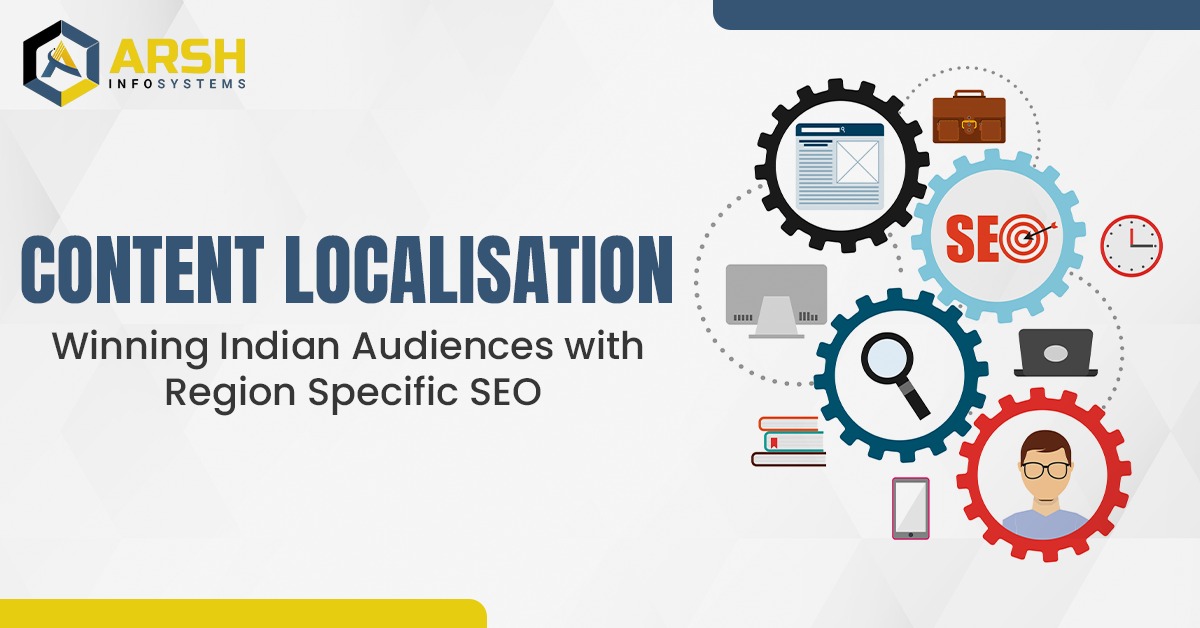
India cannot be described as monolithic digital market, but it is a vibrant mashup of varied regions, languages, cultures and search behaviours. The way of searching online varies with the local language preferences, cultural context and daily needs because every state, city and even neighbourhood has its own way of searching online. What works effectively in the digital marketing/SEO strategy in Mumbai might not be equally effective in Chennai, Jaipur, or Guwahati because user intent, keyword usage and online expectations are very different in different regions.
In the case of Arsh Infosystems, we know that the Indian user is becoming more dependent on mobile phones and voice search on their native languages as the internet penetration is rising in the tier-2 and tier-3 cities. The use of conversational queries, regional terms, location specific phrases and other terms is becoming the common way of search by many users as opposed to using general keywords. This change has enabled content localisation to be an effective SEO benefit whereby brands can ensure their online presence reflects actual user behaviour.
Content that is generic and fits in one-size-fits-all does not suffice anymore in businesses that want to attain sustainable organic growth in India. Arsh Infosystems assisting the brands to use the region-specific strategies of SEO by optimising the local keywords, adjusting the messaging to the cultural peculiarities and developing the location-oriented content to reflect the way of how the people search, speak and interact in various regions of the country. Relevant and local content does not only rank higher in the search results, it also generates trust, more visits and meaningful conversions.

Localisation of content is much more than mere translation. Whereas translation entails the translation of content in one language into another, localisation entails adapting the content to suit the intent of the region, cultural differences and regional search behaviour. It makes your content to make sense to people in a particular place or locality and not to sound generic or universal.
Content localisation in the context of SEO is a strategic process that can be defined in terms of a combination of the research of keywords, cognition of the audience and technical optimization. It pays attention to the search, the preferred language and the choice of the users belonging to various geographical areas.
For example, a user in Delhi may enter the query “best digital marketing agency,” typically seeking premium, full-service providers with strong brand credibility. In contrast, a user in Gujarat may search for “SEO company in Gujarat,” focusing more on location-based services, cost-effectiveness and local support. Similarly, a user in Mumbai might search for “digital marketing agency in Mumbai” or “SEO services in Mumbai,” often expecting industry- specific expertise, quick turnaround times and agencies experienced in working with highly competitive metro markets.
Although the core intent remains the same to find a reliable digital marketing partner the keywords, expectations and conversion triggers vary by region. Content localisation helps bridge this gap by delivering the right message to the right audience at the right location, ensuring higher relevance, stronger engagement and better conversion outcomes.
India’s diversity is truly unmatched. With 22 official languages, hundreds of dialects and a wide range of cultural and economic differences, user behaviour on the internet varies significantly from one region to another. A digital marketing approach that works in metropolitan cities like Mumbai or Bangalore may not perform as effectively in smaller cities or rural regions, where search intent, local trends and language preferences differ. This makes region-specific SEO an essential strategy for businesses aiming to grow organically in India.
Most Indian users look for solutions that are nearby or locally available. For example, a user in Pune might search for “best plumbing services near me,” while a user in Jaipur could search for “Jaipur plumbing contractors.” Without region-specific optimisation, businesses risk losing highly targeted traffic that is more likely to convert.
People tend to engage with content that speaks their language and reflects their culture. For instance, using local phrases, referencing regional festivals, or highlighting city-specific case studies can create a sense of familiarity and credibility. This builds trust, which directly impacts conversions and customer loyalty.
Google’s algorithms are designed to provide the most relevant results for local queries. Service-based searches, such as “SEO agency in Mumbai” or “coffee shops near me in Chennai,” are ranked based on location, user intent and local relevance. Businesses that ignore localisation miss out on higher visibility in these highly competitive searches.
India is a mobile-first country and the rise of voice search in native languages is reshaping online behaviour. Users frequently use conversational queries like “best digital marketing agency near me” in English or “Mumbai mein SEO agency” in Hindi/Marathi. Optimising content for regional languages and search patterns ensures your brand reaches audiences where they are searching.
By focusing on region-specific SEO, businesses attract high-intent, local users rather than generic national traffic. These users are closer to making a decision, resulting in higher engagement, lower bounce rates and improved conversion rates.
Ignoring these factors means missing out on valuable, ready-to-convert traffic and losing potential customers to competitors who understand and implement region-focused strategies. In a country as diverse as India, local SEO is not optional it is essential for sustainable digital growth.
To succeed with content localisation, it’s crucial to understand how Indian users search online. Search behaviour in India is highly influenced by language, location, device usage and cultural context. A one-size-fits-all approach rarely works, which is why region-specific strategies are key to reaching the right audience effectively.
The same product or service cannot be searched in a similar way in different states, cities and even neighbourhoods.
For instance:
These differences are conditioned by the local languages, cultural peculiarities, urban vs rural consciousness. Those brands which optimise on these region-specific keywords are able to capture highly specific traffic which have a better chance of conversion.
Urban users are more comfortable searching in English, using formal keywords and relying on reviews, ratings and brand reputation. For example, “best digital marketing agency Mumbai” or “premium AC repair services in Delhi.”
Semi-urban and rural users increasingly search in Hindi or other regional languages. Queries are often conversational or phrased naturally, such as “Pune mein plumber kaise milega” or “Bengaluru mein bike service center.” Understanding these differences helps brands craft content that resonates with each segment and improves engagement across diverse audiences.
Voice search is growing rapidly in India, especially on mobile devices. Users tend to speak naturally and regionally, making queries longer and more conversational. Examples include:
“Best digital marketing agency near me in Andheri” “SEO services agency available today in Mumbai” “Top content marketing agency in Jaipur”
Optimising content to answer these natural language questions helps brands appear in featured snippets, voice search results and local map packs, increasing visibility and conversions.
With India being a predominantly mobile-first country, users search on the go, often with location-based intent. Mobile users expect quick answers, easy navigation and regionally relevant information. Websites that fail to provide mobile-friendly, locally targeted content risk losing traffic and credibility.
Search behaviour in India is also shaped by regional events, festivals, seasons and local trends. For example:
Content localisation allows brands to capture these time-sensitive and region-specific searches, making marketing efforts more relevant and timely.
By understanding these behaviours, businesses can design content that aligns with user intent, improve search visibility and build stronger connections with local audiences across India.
Creating content that resonates with Indian audiences requires more than just translation. Effective content localisation ensures that your content connects with the audience culturally, linguistically and contextually, increasing engagement, trust and conversions. Below are the key elements to focus on:
Instead of targeting generic national-level keywords, focus on keywords that reflect regional intent. This ensures that your content reaches audiences who are actively looking for services in their specific location.
City-specific keywords: For example, “digital marketing agency in Mumbai” or “SEO services in Jaipur.”
State-based search terms: For instance, “content marketing agency Gujarat” or “social media marketing agency Tamil Nadu.”
Language-specific variations: Many users search in regional languages or mix English with local terms, e.g., “Bangalore mein SEO agency” or “best digital marketing company Delhi.”
Tools like Google Keyword Planner, Google Search Console, Ubersuggest and regional autocomplete suggestions can help discover location-specific and language-based keywords that drive high-intent traffic.
Content should reflect the cultural and contextual nuances of the region. This includes local traditions, festivals, industries, climate and lifestyle.
For example, a marketing agency in Delhi could reference Diwali campaigns or seasonal promotions to connect with local businesses.
A Chennai-based agency could highlight campaigns aligned with Pongal or summer marketing strategies.
Using local examples and relatable scenarios makes your content feel personalised, enhancing trust and engagement.
Even when creating English content, the tone should adapt to Indian readers’ expectations:
Simple, clear language: Avoid jargon and overly complex sentences.
Direct, value-driven messaging: Highlight solutions, benefits and outcomes quickly.
Relatable examples: Incorporate local businesses, cities, or scenarios relevant to the audience.
For multilingual content, ensure the translation feels natural, avoiding literal translations that may sound awkward in the local context.
Calls-to-action should feel specific, personal and location-aware. Localised CTAs make users feel the service is available and relevant to their area.
Examples include:
“Get a free quote in Pune today”
“Contact our Mumbai office for SEO solutions”
“Schedule a consultation with our Delhi team”
Well-crafted, localised CTAs increase click-through rates and lead generation by giving users a clear, region-specific action to take.
Visual Content: Use images, infographics, or videos that reflect the local culture or environment.
Local Testimonials and Case Studies: Highlight success stories from clients in the same city or region.
Location Pages: Create dedicated landing pages for each city or region, with unique content tailored to local searches.
Consistency Across Channels: Ensure social media, website content and Google Business Profile listings are aligned with localised messaging.
By integrating these elements, businesses can create highly relevant, engaging and SEO-friendly content that resonates with audiences across India’s diverse regions, driving higher visibility, trust and conversions.
In a diverse country like India, local SEO is crucial for businesses aiming to attract high-intent customers in specific cities or regions. Optimising your online presence for local searches ensures that your brand appears in front of users when they are actively searching for your products or services nearby. Below are key strategies to implement:
Creating dedicated landing pages for each location you serve is one of the most effective local SEO strategies. These pages should be unique, informative and optimised for local search intent.
Avoid simply swapping city names on one page. Google values original, high-quality content that truly reflects the local context.
For businesses with physical locations, Google Business Profile (formerly Google My Business) is critical for appearing in local map packs and top search results.
Optimising your Google Business Profile ensures that your brand appears in searches like “SEO agency near me” or “digital marketing services in Mumbai,” which are highly conversion-driven.
3. Local Backlinks and Citations
Building authority for local SEO requires links and mentions from relevant, region-specific sources:
These local backlinks and citations boost domain authority, improve visibility for location-based queries and signal to Google that your business is trustworthy and relevant in that region.
By combining these strategies, businesses can capture highly targeted, location-specific traffic, improve local rankings and generate leads from users who are ready to engage or make a purchase.
India is experiencing a remarkable surge in vernacular internet users. While English remains widely used in metros, a large portion of online traffic now comes from users searching in Hindi, Tamil, Telugu, Marathi, Bengali, Gujarati and other regional languages. These users often prefer content that feels native, relatable and culturally relevant. For businesses, this presents a huge opportunity to capture untapped audiences through language-based SEO.
1. Wider Reach in Non-Metro Regions
Millions of users in tier-2 and tier-3 cities rely on vernacular content. For example, a small business in Jaipur may attract more traffic by publishing blogs in Hindi alongside English content, reaching audiences who are otherwise underserved.
2. Lower Competition Compared to English Keywords
English keywords are often highly competitive and expensive to rank for. Vernacular keywords usually have lower competition, allowing businesses to rank higher more easily and generate local leads effectively.
3. Higher Engagement and Trust
Content in a user’s native language builds instant familiarity and credibility. Users are more likely to spend time on the site, engage with content and convert when it is written in their preferred language.
4. Better Conversion Opportunities
Users searching in their regional language are often more specific and action-oriented, such as “Mumbai mein SEO agency” or “best digital marketing company Pune.” Optimised multilingual content captures these high-intent searches.
1. Create Original Regional Content
Avoid simply translating English content. Instead, create content that is contextually relevant to the region, incorporating local examples, festivals, industry trends and colloquial expressions.
2. Use Proper Hreflang Tags
Implement hreflang tags to signal to search engines which language or region each page targets, preventing duplicate content issues and ensuring users see the right version.
3. Ensure Accurate Localisation, Not Machine-Only Translation
Machine translation can often be inaccurate or unnatural. Use professional localisation to adapt tone, phrasing and context to the regional audience, making the content feel authentic and engaging.
4. Optimize Metadata and Keywords in Local Language
Titles, meta descriptions, headings and keywords should be optimised in the target language. For example, “सर्वश्रेष्ठ डिजिटल मार्केटिंग एजेंसी मुंबई में” can rank well for Hindi searches in Mumbai.
5. Leverage Voice Search
Many vernacular users prefer voice search, which is more conversational. Optimising for long-tail, question-based queries in regional languages helps capture this traffic.
6. Combine English and Regional Keywords
Some users use mixed-language searches, such as “SEO agency Mumbai mein.” Including these bilingual keywords increases your chances of appearing in search results.
To effectively engage Indian audiences, businesses need to create content that speaks directly to the needs and interests of local users. Certain content formats naturally attract regional traffic, improve search visibility and increase trust.
1. City-Specific Service Pages
Dedicated pages for each city or region are highly effective in capturing location-based searches.
Example : “Digital Marketing Agency in Mumbai” or “Industrial Valve Suppliers in Ahmedabad.”
These pages should include local keywords, contact details, office location, team information and testimonials from clients in that city.
Add local landmarks, maps, or images to make the page feel regionally authentic.
City-specific pages help your business appear in Google Maps, local search results and top search rankings for users searching for services nearby.
2. Local Blogs and Guides
Blogs that focus on regional trends, industries, or buying behaviour drive organic traffic and engage local audiences.
Examples
“Top SEO Strategies for Businesses in Bangalore” “Best Packaging Suppliers in Pune: A Complete Buying Guide” “Festive Marketing Ideas for Delhi Businesses”
These types of content serve two purposes: informational value for the audience and search visibility for city or region-specific queries. Including data, case studies, or insights relevant to a city increases the content’s credibility and shareability.
While content localisation offers tremendous opportunities in India, mistakes can reduce effectiveness and even harm your SEO performance. Here are the most common pitfalls to avoid:
Translating content word-for-word often results in awkward phrasing or miscommunication. Content must adapt to local culture, idioms and user expectations. For example, a marketing message that works in Mumbai may not resonate in Chennai if local preferences or language nuances are ignored.
Overusing city names or location-specific keywords can appear unnatural and penalise your rankings. Keywords should be used strategically and contextually, appearing organically in headings, meta descriptions and body content.
Copying the same content for different city pages diminishes user engagement and can trigger duplicate content issues with search engines. Each location page should have unique content, testimonials and examples relevant to that area.
Users in different regions may have different needs, expectations, or search behaviours. For instance, someone searching for “SEO agency Mumbai” may expect premium services for highly competitive markets, whereas “SEO agency Jaipur” users may look for cost-effective solutions.
India is a mobile-first market and many users search on smartphones in local languages. Websites that aren’t mobile-friendly, fast-loading and responsive risk losing engagement and conversions. Avoiding these mistakes ensures that your localisation strategy is effective, user-friendly and SEO-compliant.
Tracking performance is essential to refine your strategy and maximise ROI.
Tools like Google Analytics, Google Search Console and local rank trackers can help filter and analyse performance by location. Regular monitoring allows you to optimise content, adjust keywords and improve engagement for each region.
The future of SEO in India is increasingly hyperlocal and language-driven. Brands that invest in localisation early will gain a competitive edge in regional markets.
Emerging trends:
By staying ahead of these trends, businesses can reach regional audiences effectively, improve engagement and dominate local search results, setting themselves apart from competitors still relying on generic, national-level SEO strategies.
In India’s diverse digital landscape, content localisation is key to connecting with audiences, improving engagement and driving conversions. By focusing on region-specific keywords, culturally relevant content and language-based SEO, businesses like Arsh Infosystems can reach users where they are, meet their expectations and stay ahead of competitors. The right message, in the right place, at the right time this is how brands win Indian audiences.
Copyright © 2026 All Rights Reserved By Arsh Infosystems.
Reviews On 
Years experience
Satisfied clients