Komal Saim Nov 09, 2025


Komal Saim Nov 09, 2025
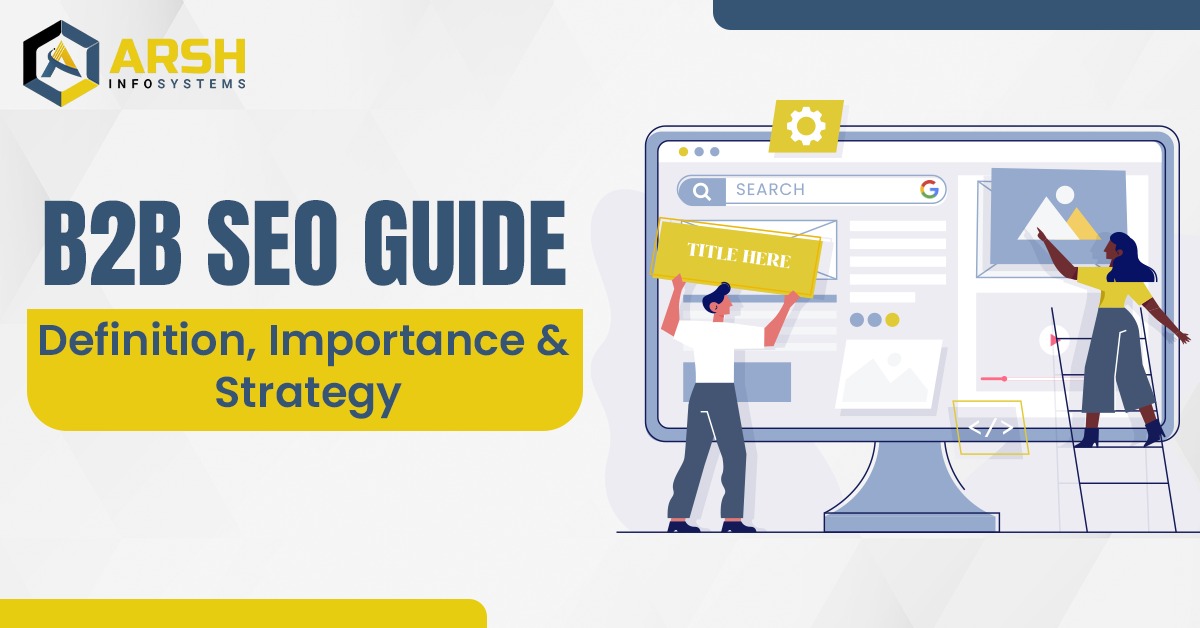
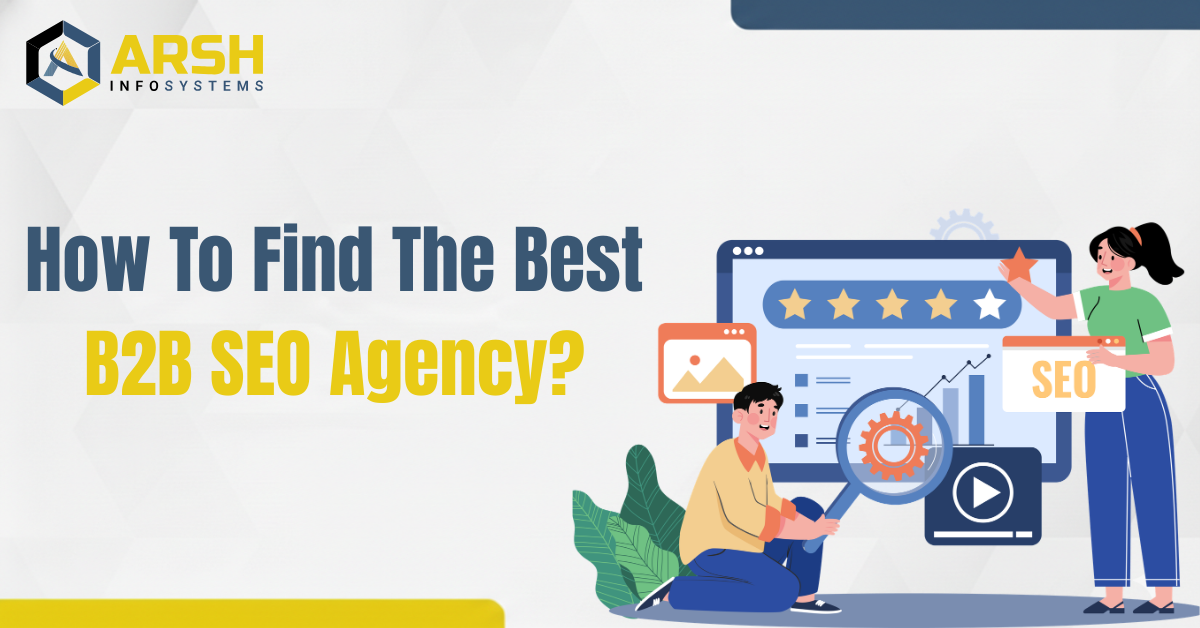
In the modern, digital-centric business environment, leaders use search engines extensively to learn about brands, evaluate solutions, and identify potential suppliers. The given shift renders B2B SEO all the more crucial than ever before in the case of companies, which prioritise constant visibility, high-quality leads and high online credibility.
Business buyers, on the other hand, do not make decisions in a rush, as they take time to research, read, evaluate, and audit their partners. The carefully designed B2B SEO will make sure that your brand is present in all these journeys as buyers seek knowledge, compare, and even seek a service provider. Through an effective B2B SEO agency or a properly planned in-house solution, you are able to match the intent of your buyers with your website and achieve valuable outcomes.
Through proper choice of B2B SEO keywords, good content and technical optimisation, you are going to gain long-term authority and get those decision-makers who are already interested in what you are offering. This guide defines, describes the significance, and provides effective techniques proven in B2B SEO to make your business place higher and more effective in terms of conversion.
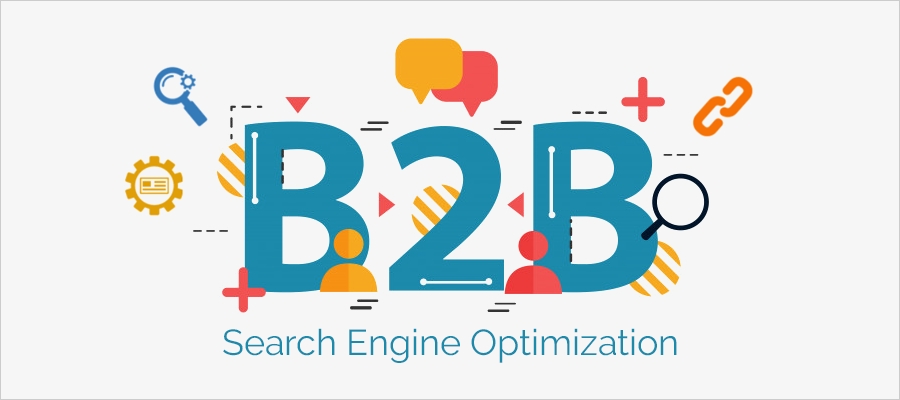
Business-to-Business Search Engine Optimisation (B2B SEO) refers to the art of ensuring that your webpage gets ranked higher whenever business buyers search for products or services offered by you. B2B purchasing, in contrast with B2C, has protracted sale cycles, numerous stakeholders, and thorough research on all levels.
The essence of B2B SEO lies in the following simple goal:
Refer highly targeted and relevant companies to your website, businesses that are already seeking the solutions you provide.
Since B2B search is niche, intent-based, and tends to be industry-based, selecting the appropriate B2B search keywords will be critical. The keywords will make your site visible when people want meaningful searches and real decision-makers, instead of idle visitors, will see your content.
B2B SEO is effective as it ensures that your site is optimised to the specific search, research, and evaluation patterns of business buyers on the internet. Because B2B purchasers are slow in decision-making and can be shopping at different merchants, it is necessary to provide the appropriate documents at each stage of their journey. B2B SEO works fully and strategically as follows:
Every business buyer lands on Google with a purpose. Some want to learn, some want to compare options, and some are ready to make a decision. Recognising search intent helps you create content that matches what buyers are looking for at each phase.
Awareness Stage:
Buyers are exposing problems or getting informed about solutions. Here, blogs, guides, tutorials and industry insights work best.
Consideration Stage:
Buyers begin to consider the possible choices. They are nurtured with comparison pages, product benefits, case studies and feature lists.
Decision Stage:
Business people are near a supplier. They are converted with the assistance of service pages, pricing details, demo request pages, and FAQs. The B2B SEO strategy makes you appear in all three levels of intent- not only the first one.
Search engines reward websites that are professionals in the niche market. To do this, you need to design an organised content system that will exhaust your key subjects.
This includes:
This is normally among the initial steps that are undertaken when you collaborate with the finest B2B SEO agency- mapping the topics that your brand needs to have ownership of to regularly rank and establish a solid authority.
One of the most crucial aspects of B2B SEO is the choice of keywords. You do not simply need volume; you need to find keywords that represent business buyers who have actual purchase intent.
These typically include Keyword :
Comparative queries to competitors
Accurate and well-researched B2B SEO helps guarantee that you appear in the search results of the relevant audience and not just random traffic that will never buy the item.
The most precious content will not work in case the technical side of your website goes wrong. Technical search engine optimisation is to make sure that Google can crawl, comprehend, and index your site.
Key elements include:
A properly constructed site inspires confidence not only with Google but also with business clients who demand a fast and professional interface.
External links are credibility enhancers. When you have reputable sites in the industry referring to you, it is an indication to Google that you have reliable content that is worthwhile.
A good B2B link-building involves:
These power structures contribute significantly towards making your site rank higher than the rest and increasing its visibility in the long term.
B2B SEO aids in contacting business people who are in the process of searching for the products or services you provide. It is also inviting the high-intent leads rather than random visitors, which is much more likely to turn into long-term clients.
Contrary to paid campaigns, which cease to provide results upon cessation of budgeting, SEO keeps on bringing traffic in the long run. Each page optimised creates long-term visibility, cutting down on total acquisition costs and enhancing long-term profitability.
Having your web page in the first place on Google automatically makes your business look like an authority in the industry. This becomes particularly useful in industries such as SaaS, manufacturing, consulting and technology, where trust is a consideration in the purchasing process.
SEO-driven content informs your potential e-customers even before they can make a call to your sales department, which reduces the sales process by a big margin. They are conversational-ready and know what you offer by the time they contact you, thus making conversations productive.
SEO is still underestimated by many B2B companies, but this presents a huge opportunity for early adopters to dominate their niche. By implementing a strong SEO strategy, your business can rank higher than competitors, increase visibility, and stay top-of-mind for potential buyers. Investing in SEO ensures that when your target audience searches for products or services you offer, your brand is the first choice, driving more qualified leads and long-term growth. For more insights, check out our detailed guide Why SEO is Important for B2B Growth in 2025
B2B SEO needs to be a strategic approach based on research since the buying decision of the business buyer is not the same as that of the ordinary consumer. They take time to consider solutions, do vendor comparison, search credible information before they act. Because of this, your SEO plan should not only be created to drive traffic, but should capture, educate and convert high-value prospects.
Through keyword targeting, quality content, technical optimisation, and authority-building strategies, B2B businesses could always enhance their visibility on the internet, yield qualified leads and build on their market position. The above strategies have been found to give quantifiable outcomes to the businesses that intend to conquer the niche and get in contact with the decision-makers.
The key to effective B2B SEO is to first know what your target audience is actually searching for. B2B buyers are very specific, unlike B2C, where broad or trending keywords can be used; they need solutions to specific problems, products that meet their needs, or comparisons so that they can make informed decisions. Attacking general and high traffic keywords can usually bring up irrelevant traffic, which is hardly convertible. Pain-point keywords
That way, you will capture decision-makers and not just visitors who visit and never become converts.
B2B purchasers have faith in brands that inform, instruct, and assist them in all the decision-making stages. They also take time in researching solutions, checking vendors, and making comparisons before deciding, as opposed to casual consumers who are quick to make a decision. With the production of high-value content, your business is now a reliable partner as opposed to another seller attempting to.
Create content such as:
The more useful and relevant your content, the more you are likely to attract buyers to your business as compared to competitors.
On-page SEO relates to ensuring that all the pages on your site are fully optimised to perform better in the search engines, besides presenting a straightforward and exciting experience to your visitors. It aids Google in knowing what your content entails and that users can find the required information in a short period of time. The engagement of the users, also enhanced by well-optimised pages, can lead to better rankings and conversions.
Even the best B2B SEO agency starts with strong on-page fundamentals because they influence both rankings and user engagement.
B2B Technical SEO is your whole site. A quick, safe and properly organised site not only assists Google crawlers and indexers to view and index your pages more efficiently, but also gives an easy experience to your visitors. Business buyers have requirements for websites that can load fast, be easy to navigate and work perfectly across all devices. Even the most effective content or keywords would not help to convert potential clients; in case of any technical problems, they might be frustrated.
A site with good technical aspects enhances the user experience and chances of ranking on competitive terms.
Backlinks are an important aspect of the credibility and authority of your website. Reputable sites in the industry that are linked to your content are an indication of trust to Google and you can improve the ranking of your keywords. In the case of B2B companies, they concentrate on receiving links via thought leadership articles, case studies, guest posts, and partnerships with industry blogs/publications. Good backlinks not only increase your visibility in the search but also introduce your brand to the right decision-makers.
Each high-quality backlink serves as a “vote of confidence,” improving your domain authority and overall visibility.
The contemporary SEO transcends past the keywords that Google currently prefers, offering organised, clear and informative information. With clear headings, brief responses and the appropriate data, you can have your pages appear on AI Overviews and featured snippets. In the case of B2B businesses, this can be utilised to capture the attention of the decision-makers who require accurate information in a short time, increasing the visibility, credibility, and qualified traffic.
This approach improves how Google evaluates your pages and ensures your readers get clear, helpful information.
It is imperative to monitor your B2B SEO performance to know whether your efforts are paying off and to know what should be improved. The frequent monitoring can also enable you to know which strategies are causing traffic, getting qualified leads, and assisting your business to meet its objectives. There can be no knowledge of what is working and where to make some adjustments without measurement.
Key metrics to track include:
Such tools as Google Analytics, Google Search Console, SEMrush, and Ahrefs allow us to keep track of these indicators and give some practical advice. When you keep measuring and testing your SEO strategy, your B2B site is bound to attain growth and long-lasting outcomes.
B2B SEO ceases to be a luxury; it is the root of sustainable digital success. Regardless of whether your partner is a B2B SEO agency or you handle the strategy in-house, selecting targeted keywords, high-value content, technical perfection, and building authority will make your presence noticeable online considerably. B2B SEO will enable you to find qualified decision-makers, establish industry credibility and create a steady, high-value stream of leads that result in sustainable business expansion with the correct strategy.
Copyright © 2026 All Rights Reserved By Arsh Infosystems.
Reviews On 
Years experience
Satisfied clients