Komal Saim Dec 31, 2025


Komal Saim Dec 31, 2025
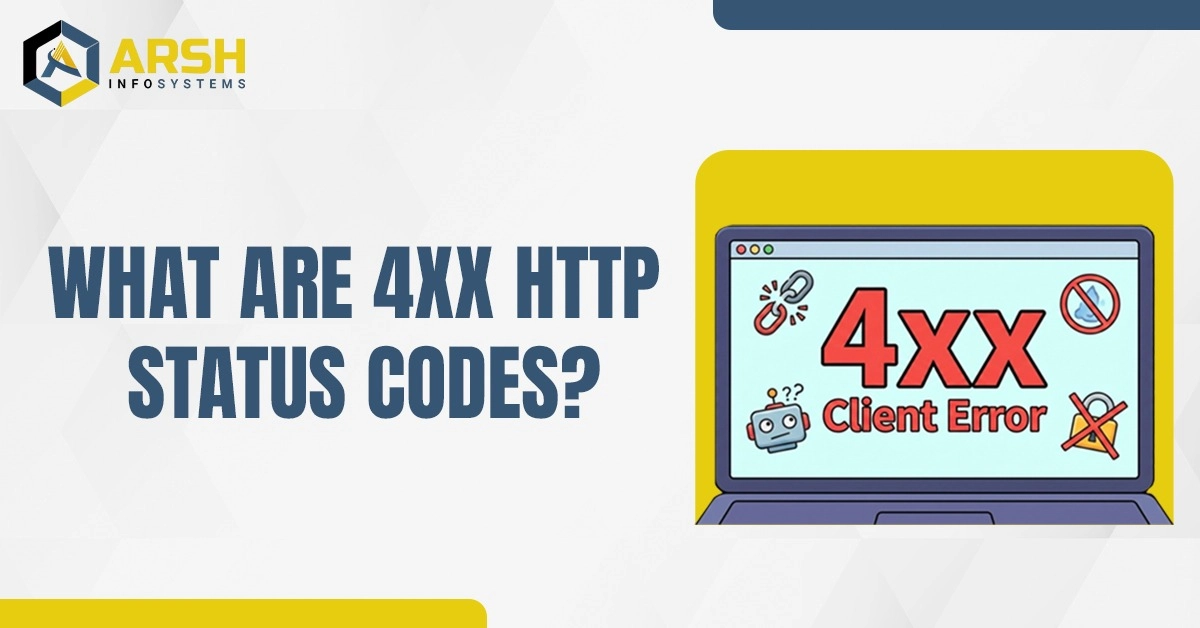
In the background, whenever you visit a site and something fails to work, e.g. a page is missing or the site is not allowing you to access it, you are most likely to be dealing with an HTTP error. Of these, 4xx status codes are some of the most widespread and have the most negative implications upon users, developers and SEO practitioners.
The 4xx errors refer to the client-side problems, that is, the server received the request, but could not serve it owing to a wrong URL, a broken link, a lack of permission, or an authentication issue. Although the server is itself operating properly, the request itself is incorrect or incomplete.
The knowledge of 4xx HTTP status is important to ensure the preservation of the performance of the website, user experience and search visibility. Errors that go unaddressed may be frustrating to users, increase the bounce rate, waste crawling budget and not include valuable pages in search results.
Here, we shall define the concept of 4xx HTTP status codes, give our examples of them, their effect on SEO and the best practices that can be used to correct them and avoid them. We assist businesses to find and fix these mistakes at Arsh Infosystems by taking strategic steps for the business, such as SEO and optimisation of the webpage, to help the business achieve better health of the site, higher ranking and the user experience should be made easy.
Code HTTP status codes refer to standard three-digit response codes transmitted by a web server to a browser or a client when a request is received for a webpage, a file or a resource. These codes serve as a communication layer between the server and the client, and it is clear whether the request was fulfilled, redirected to another path, or the request was not fulfilled because of an error.
Browsers, developers, and search engines do not have to guess at all, but can readily interpret the result of each request using the HTTP status code. They are very important in the functionality of websites, monitoring of performance, debugging, and SEO because search engines apply these responses to determine how pages are to be crawled, indexed or excluded in search results.
The HTTP status codes are categorised into five broad segments of which signifies a type of server response:
1xx - Informational Responses
These codes are used to show that a server has received the request and is still processing it. Users can hardly see them, butthey are necessary in communication when making complicated requests.
2xx - Successful Responses
This category verifies the fact that the request was received, understood and processed. The most widely used one is the 200 OK that informs users as well as the search engines that the page has loaded properly.
3xx - Redirection Responses
Redirection codes indicate that the resource that is being requested has been relocated to a new URL. Such responses are useful in preserving the structure of the websites and SEO value when pages are modified or moved.
4xx - Client Error Responses
These are errors arising when the request has invalid information, like faulty links, an inappropriate URL or absent permissions. The server is functioning correctly; however, it is unable to process the request because of a problem on the client-side.
5xx - Server Error Responses
The server error codes are used to express that the server was unable to handle a legitimate request because of internal problems, crashing, or the server being misconfigured.
Knowing the status code of HTTP and its categories will help the owners and developers of websites to diagnose and fix problems at an even faster speed, enhance user experience and support a healthy and search engine friendly web site. With appropriate management of these responses, proper communication between the browsers and the servers will be guaranteed, as well as the long-term success in web performance and SEO.
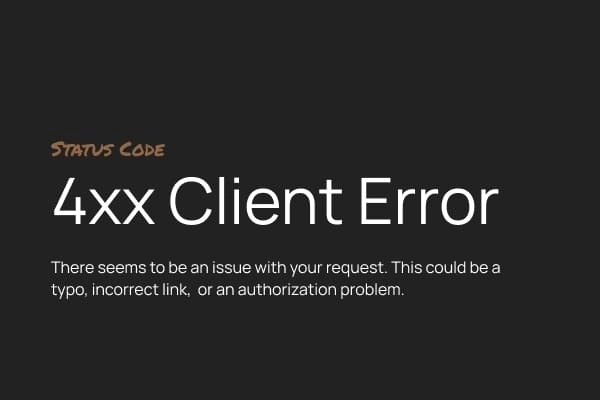
Status code 4xx on the client-side indicates client-side errors; this implies that the server has obtained the request but is not able to complete it because of a problem with the request. Where these do occur, the server is not malfunctioning; instead, the user or browser is asking for an invalid, unavailable or restricted resource.
Such errors are usually committed when:
Contrasting with 5xx errors, which rely on the server-side issues, 4xx errors ensure that the server works and the problem is in the request of the client. Although they tend to be easier to address, the unresolved 4xx errors will harm the user experience, navigation and the performance of the website in terms of SEO. This is achieved through regular checkups and fixes of the site to ensure it remains healthy, user-friendly and optimised for search engines.
| Aspect | 4xx HTTP Errors | 5xx HTTP Errors |
|---|---|---|
| Error Type | Client-side errors | Server-side errors |
| Cause | Caused by issues in the browser, user action, or request | Caused by server failure or misconfiguration |
| Server Status | The server is working correctly | The server is not functioning properly |
| Common Reasons | Broken URLs, deleted pages, missing permissions, invalid authentication | Server crashes, overloads, coding errors, database failures |
| Example Error | 404 Not Found – Page does not exist | 500 Internal Server Error – Server malfunction |
| SEO Impact | Easier to fix; usually related to content, links, or redirects | More complex; may impact site availability and crawling |
| Fix Approach | Update URLs, fix links, apply redirects, correct permissions | Debug server issues, fix scripts and upgrade hosting |
| User Experience | Users see missing or restricted pages | Users experience site downtime or loading failures |
In case something fails on a site, it is likely to be due to the 4xx HTTP status codes. Such errors inform us that the server is functioning properly, and there is something wrong with the request that was made by the browser. Let us consider the most frequent 4xx errors that you can encounter and what they refer to in simple terms.
A 400 Bad Request error is received by the server, which is not able to interpret what the browser is requesting. This is normally the case due to an error in something in the request, or the request may be incomplete.
Common reasons include:
This problem can be solved in most instances by refreshing the page, correcting the URL or clearing the browser information.
A 401 Unauthorised error is used when the page or resource requires you to log in, although valid credentials have not been provided. It is usually observed on secure websites or applications, which are authenticated.
Common reasons include:
This error is normally solved by merely re-logging in or by changing authentication details.
The server knows that you have requested something, but it is not going to permit it, with a 403 Forbidden error. You can be logged in but not be able to see the content.
Common reasons include:
when a page that you are searching for is no longer there or it was not there at all.
Common reasons include:
A 405 Method Not Allowed error occurs when the request is sent with an incorrect method, e.g. someone attempting to post data in a manner that the server does not accept.
Common reasons include:
A 408 Request Timeout error is experienced when the server takes excessive time to respond to a request, and the server ultimately fails.
A 409 Conflict error implies that the request was not fulfilled since it conflicts with the existing state of the resource.
Common reasons include:
A 410 Gone error informs the user and search engines that a page is being permanently deleted and will not be republished.
SEO Tip: Once a page is deliberately deleted, use this status. It assists search engines to delete the page more quickly than a typical 404.
The error code 429 Too Many Requests is displayed when the number of requests sent within a period of time is excessive.
Common reasons include:
The 4xx HTTP status codes can be perceived as little technical troubles, but they are able to negatively affect your website's SEO performance unnoticeably when not addressed. Because search engines pay much attention to the user experience and the quality of sites, any frequent client-side bugs may convey an unhealthy message about your site.
The search engines provide the search site with a reduced crawl budget. As bots waste time crawling dead or unavailable pages, they have less time to find and index your valuable material. Consequently, it can take a long time before new pages or new pages are visible in search results.
It is annoying to the users because they land on an error page. When users keep facing 4xx errors, they will tend to exit your site faster and reduce bounces and engagement rates. A bad user experience may also decrease the level of trust and make users not revisit your site.
The pages containing the constant errors 404 Not Found or 410 Gone are ultimately eliminated from the search engines' indexes. In case these pages were already traffic-generating or in case there was a backlink, their loss may cause an apparent decrease in organic traffic and keyword ranking.
Missing internal links interfere with the design of your site and undermine the flow of authority within the site. This complicates the manner in which search engines comprehend the structure of your domain and may trim down the ranking of significant pages in search results.
Issuing and avoiding 4xx HTTP errors is a critical aspect of having a healthy site. Periodic audits of the site can reveal broken links, out-of-date URLs and no longer existing pages. Early consideration of these issues helps in avoiding the occurrence of such issues as long-term SEO problems.
It is particularly important to make the right kind of redirects. 301 redirects should be used when dealing with permanent changes and 302 redirects when dealing with temporary changes. This would be a guarantee that both the users and the search engines would be directed to the right pages without sacrificing the value of SEO.
Authentication and permission settings are also to be checked. Access to restricted pages must be limited to situations when it is necessary, without accidentally blocking users or search engine crawlers. The configuration is used to prevent unwarranted errors in access.
It is possible to make a personalised 404 error page that will significantly enhance user experience. A helpful 404 page encourages users to discover more information as it does not imply a dead end but instead directs them to the content, popular pages, or search options on a site.
Lastly, URL validation, request and form input validation can be used to curb malformed requests, which cause client-side errors. As a result of regular monitoring and proactive resolutions, you will be able to minimise the number of 4xx errors, increase the usability of your site and sustain the growth of SEO in the long term.
It is essential to use standard monitoring and active maintenance of the websites to deal with 4xx HTTP errors. Such errors usually build up over time as a consequence of content modifications, changes in URLs or authorisation, and thus it is imperative to keep ahead of these errors to have a healthy website.
Begin by tracking mistakes with Google Search console that allows tracking pages with 4xx responses and how the search engines are working with your site. This will enable you to resolve problems before they have an impact on indexing or rankings.
Periodic analysis of server logs gives you a more detailed picture of web access by users and search engines. Logs might be used to reveal secret errors, strange request patterns, and frequently used broken URLs that might not be evident in commonly used search engine optimisation tools.
Establishing automatic notifications in case of sudden 4xx errors is vital so that issues can be resolved at an early stage. This can prove particularly handy following updates, migrations or modifications to a particular plug-in, which may accidentally fail links or permissions.
Maintaining URLs in a clean, organized and consistent way minimises the chances of making mistakes by using wrong or outdated links. The naming of URLs has also been enhanced using clear conventions, which enhance user trust and search engine interpretation.
When the material is old or deleted, it is always good to update links or use the correct redirects rather than leaving the dead links on the ground. This maintains SEO worth and retains the visitors on the correct course.
Lastly, avoiding the unnecessary bot traffic helps to avoid overloading the servers, unnecessary requests, and eliminates errors such as the 429 Too Many Requests. Good bot management will make sure that your site is not interfered with by search engine crawlers.
You can easily troubleshoot and take corrective measures when you understand 4xx errors and how they differ from other status codes of the HTTP protocol.
Redirection is done using 3xx status codes. They lead the users and search engines between pages where a page has moved or changed. When applied in the right way, these reactions are usually beneficial and will be significant in maintaining SEO value.
On the other hand, 4xx errors mean that the request has failed. These errors prevent access through the site because of problems such as missing pages, faulty URLs or restrictions of access. Although the 4xx errors are tolerable in a few instances, recurrent ones are indicative of deeper issues that should be addressed.
4xx errors are those that are caused by problems on the client side; that is, the server is up and running, but cannot handle the request in the form that is sent. Such mistakes usually have to do with links, content, or access settings and are normally rectifiable with good maintenance.
Conversely, 5xx errors represent server-side failures, e.g. crashes, configuration errors, and clogged resources. Such mistakes may bring even an entire site to a halt, and can often be fixed at the technical or hosting level.
With awareness of these differences, the website owners and the SEO specialists can identify the problem and implement the appropriate solutions more quickly and have a site that works to the benefit of the user and the search engine.
Conclusion
In addition to being technical messages, 4xx HTTP status codes are indicators of the kind of user, browser, and search engine experience that a particular site provides. Although these are mistakes on the client-side, over time they may slowly shatter the usability, trust, and search visibility of your site without your attention. Bad links, lost pages and access issues not only frustrate the visitors but also consume crawl budget and undermine your SEO base.
The positive aspect of it is that the majority of 4xx errors can be avoided and corrected by conducting regular audits, appropriate redirects, proper URL structure, and proper permission settings. You can avert these mistakes before they arise, therefore, by keeping track of them and giving feedback where appropriate, you can be assured of smoother navigation by the user and better indications to the search engines.
Copyright © 2026 All Rights Reserved By Arsh Infosystems.
Reviews On 
Years experience
Satisfied clients