Komal Saim April 16, 2026


Komal Saim April 16, 2026
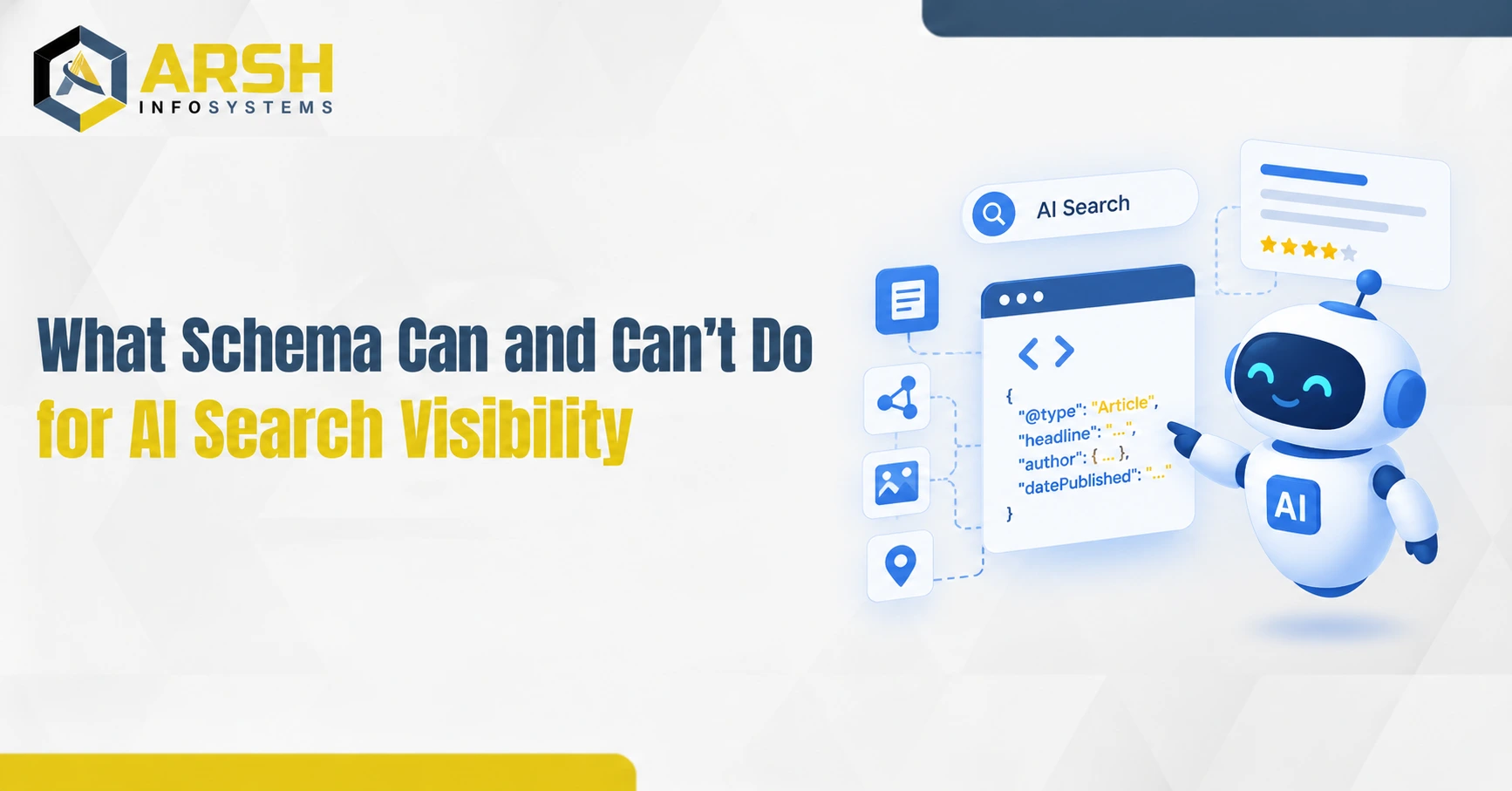
The answer engines like Google, Microsoft Bing and the current AI assistants are built on two key components, which are content and structure, to produce confident and accurate results. Whereas content gives the actual information, structure gives the context that assists the machine in interpreting the information appropriately. That is where Schema.org markup is important.
Schema markup is an intermediary between search engines and your site. It explicitly states what your content is, if it represents a brand, organisation, or an individual and explains why the organisation, individual or brand should be seen as credible. When properly applied, it will make the machines learn better about your pages and it will enhance the way your content is displayed in search results and answers offered by AI.
But a schema is not valuable in and of itself. Markup that is poorly implemented is rendered useless or even troublesome. It may cause unneeded complexity, not correspond to the content of the real pages, or break when CMS is updated and eventually become a liability instead of an asset.
This guide aims to assist people and digital marketing agencies in approaching schema markup strategically, with the emphasis on the Answer Engine Optimisation (AEO). Rather than viewing schema as a technical add-on, it must be created as a structured system that facilitates long-term scalability, consistency and performance.
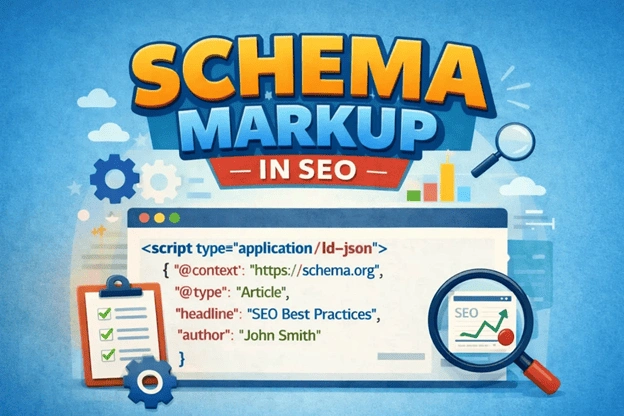
Schema.org markup provides structured data, which search engines can use to more effectively understand your content and, in other cases, can facilitate more advanced search features. Nevertheless, it should be emphasised that the schema is not a direct ranking factor. The true strength of it is disambiguation, that is, making it clear what brand or product or author is being mentioned and relating such entities to general knowledge systems.
A properly adopted schema enhances the way search engines and AI systems understand the relationship among entities, making it more accurate, understandable, and reliable. This is particularly critical in an ecosystem where machines are dependent on the structured signals in order to authenticate information.
Meanwhile, the schema must not be regarded as a means to an end of acquiring rich results. Search engines keep on advancing the features they endorse. As an example, such additions as FAQ and HowTo rich results have been decreased significantly over time. Use of schema as the sole means of visual improvements can be inconsistent.
The correct solution is to view schema as a long-term basis of meaning and clarity of entities as opposed to a strategy of gaining temporary visibility. When executed in a strategic manner, it will make sure that your content is properly interpreted and trusted to be linked within search and AI-driven systems.
In AEO, it is no longer about which page is ranked higher, but rather who is the best source. Your schema must be able to articulate your organisation, authors, services and expertise. This assists search engines in knowing the person behind the content and not what the content states.
JSON-LD is the style of choice due to its clean, flexible and implementable. More to the point, the schema must not be a standalone concept - relate entities (brand, person, content) into a graph to make search engines perceive the relationships between entities and not between them.
Clarity is critical. Connect your entities with authoritative sources with sameAs. Add credentials of people and uniform identities of organisations (name, logo, profiles). This will minimise confusion and enhance trust indicators.
Pay attention to those types of schema that offer sustained value, like organisation, breadcrumb, website, product and article markup. These either support stable search features or reinforce entity signals, even in the absence of a rich result displayed.
Schema is not “set and forget.” It may break when there is an update to the site or CMS changes. Periodic verification with structured data testing tools lets you keep your markup correct, functioning and in line with search engine requirements.
Consider schema implementation as a hierarchical system that is constructed in three layers, adding clarity and depth to the way search engines perceive your site.
This layer determines what you are as a being. Organisation and WebSite markup should be included on your homepage. The Organisation schema should show your legal name, website URL, logo, and contact information, social profiles, and any other identifying information. The schema of the WebSite must identify the name of your desired site. Combined, these form a powerful identity anchor, which assists search engines in attaching your content to the right place and tying your brand together on the internet.
Each page that can be indexed must identify itself using the WebPage schema. Include breadcrumb markup to create a sense of hierarchy of the site and enhance navigational understanding. Definitely define the focus of the page with the help of such properties as mainEntity, about, or mentions. This layer assists search engines in grouping similar material and comprehending topical associations throughout your site.
In the case of a page that will have a particular kind of content, use that type of schema. As an illustration, blog posts are Article, eCommerce pages are Product, offerings are Service, and events are Event. Make sure that you added all the necessary and advice properties so that the markup is complete, accurate and reliable.
These three layers form a scalable schema model. The first layer is identity, the second layer is context, and the final layer is content specificity, thus making sure that your site is well comprehended, well credited and well prepared in search systems using AI.
Begin by listing down all the schemas you have. Check the way markup is applied in templates and find gaps, inconsistencies, or errors. Check URLs to verify correctness and suitability for rich results. False positive. Be careful of false positives, e.g. applying article schema to category pages, and delete old or worthless schema types like bulk FAQ or HowTo when they cease to be beneficial.
Schema does not pertain to individual pages; it is the construction of an interrelationship of meaning. Build a hierarchical entity graph, which consists of your organisation, website, authors, services, and content. Connect these pieces together with stable identifiers (@id) in order to maintain relationships when the URLs might vary. This entity-first solution will be sure to have your brand recognised and attributed in AI-based responses.
A strong JSON-LD base with Organisation and Website schema should be applied to your homepage. Add correct information, which includes name, logo, URL, contact points and sameAs links to authoritative profiles. This layer serves as an anchor of your identity, and this ensures that search engines can confidently identify all the content with your brand.
All the articles must acknowledge their authors through the Person schema. Establish special author entities using fixed IDs that are associated with their profile, roles and expertise. Add affiliations, job titles and credentials. This translates knowledge into machine-readable signals that enhance trust and attribution.
Emphasise those types of schema that provide long-term value. Give precedence to article, product, breadcrumb, organisation, and website markup. Do not dilute effort in low-impact or less actively supported types. The aim is to strengthen meaningful signals, rather than look at transient characteristics.
It is not advisable to add schema when content is already published, but it is important to plan it. Pre-write: define authorship, expertise, and topic relevance. Make sure that all structured data is a true reflection of what is on the page. The schema should reflect reality and not completely miss information.
Linking your entities to reputable external sources with sameAs will make your presence in the search and AI systems more robust. The presence of profiles on sites such as LinkedIn, Wikipedia, or directories in your industry can serve to authenticate your identity and enhance attestation. This is more likely to have your content chosen as a trustworthy source of answers.
Use a service schema to clearly define what your business offers. Add descriptions, relevance to your organisation, and geographic targeting where necessary. This assists search engines in knowing not only who you are but what you do, which is an important aspect of AEO.
Implementing the schema manually is not scalable. Add data structures in your CMS templates or tag management system. Map schema properties to existing content fields (e.g., title, author, price, description) to generate markup in a consistent fashion across pages. This makes it efficient and minimises errors.
A schema is something that needs continuous management. Delegation, establishment of validation processes, and performance measurement are achieved by using such tools as Google Search Console. Periodically review the schema with updated templates or content types. Consider it a living system that continuously develops with your business and website.
Read Also
After establishing your core schema base, you can add more sophisticated components to enhance how answer engines read and present your material.
1. Enable Internal Search Actions
Adding SearchAction to your Website schema makes search engines display a sitelinks search box. Although this is not always the case, it provides another point of entry to users directly out of search results.
2. Highlight Product Pros and Cons
Structured pros and cons are supported by the Modern Product schema. This is in line with the natural way that users consider options and can increase your opportunity of better visibility in product-related searches.
3. Use “about” and “mentions” for Context
Such properties assist in establishing what your content is all about. You can increase topical relevance by associating topics with established entities, which helps engines to place your content in extended knowledge graphs.
4. Introduce Individuals to Your Brand
Connecting your organisation with authors, experts and team members builds more authority signals. It is particularly helpful in industries that are sensitive to trust, in which case experience is the most important factor.
Even well-structured strategies can fail if execution is careless. Avoid these frequent pitfalls:
Adding every possible schema type creates noise instead of clarity. Focus only on what directly represents your content and business.
Structured data must reflect what users actually see. Any mismatch like fake ratings, can damage trust and lead to penalties.
The schema can silently break during site updates. Without regular checks, errors can persist and weaken your AEO performance.
If you don’t clearly define and connect your entities using identifiers and sameAs, search engines may struggle to recognise your brand correctly.
Search features change over time. What worked before (like FAQ-heavy strategies) may lose impact. Stay updated and prioritise what still delivers value.
Schema must not be in a vacuum; it must be representative of your general brand positioning. When your structured data links your organisation, people, services and content, you build a machine-readable brand story.
Such is what answer engines depend on to determine whose answer is good enough to show.
When your brand is purporting to be an expert, then your schema must tie actual experts and content.
When your brand is about trust → your schema must display authorship and proper information.
When your brand has a solution to offer → your schema must specify services.
The schema turns out to be not merely a reinforcement of your standpoint.
Schema performance is not a metric, as with standard SEO. Rather, seek signs that are indirect and significant:
In the long term, the greatest advantage is less ambiguity - the search engines can more reliably select your content.
Schema markup is not a shortcut or one-time technical exercise; it is an investment in the long-term understanding of your brand by machines. With answer engines and AI systems dominating the ecosystem, visibility does not merely consist of ranking pages anymore but of being regarded as a trusted and authoritative party.
When used in a strategic way, schema not only boosts search results, but it also creates clarity, enhances entity connections and boosts your reliability on knowledge graphs. It makes sure that your material is not only subjugated but also read correctly and credited with the appropriate source.
Copyright © 2026 All Rights Reserved By Arsh Infosystems.
Reviews On 
Years experience
Satisfied clients