Komal Saim March 11, 2026


Komal Saim March 11, 2026
In an SEO audit, the presence of two or more H1 tags on a webpage is usually cited as one of the mistakes. This may be complicated since the Search Advocate of Google, John Mueller, has said that the use of a number of H1 tags is absolutely normal. Although Google has got an advanced algorithm to be able to read page structure when it has several H1 headings, best practices of SEO still suggest having a straight forward hierarchy of heading. The reason is that, headings aid the search engines, users and accessibility tools to comprehend the structure and the main subject of a web page better.
The structure of headings should also be well designed, to be more accessible and user-friendly. The WebAIM Screen Reader User Survey states that 71.6% of users navigate webpages through jumping between headings, and thus appropriate hierarchy is necessary. This is why the majority of SEO professionals and experts, as well as teams of the SEO-related agencies in Mumbai, such as Arsh Infosystems, suggest one major H1 and then organize H2 and H3 headings. This will enhance readability, facilitate criteria of accessibility and enhance the overall performance of the website.

HTML4's Linear Hierarchy
Early web saw HTML4 being hierarchical in nature. Every page was considered to be one document and had a single title. H1 tag was used as the main heading, which was used to determine the main content of the whole page, and H2-H5 subheadings helped to establish a logical content structure beneath the main heading.
The important features of the HTML4 heading model were:
This was an efficient system when it applied to simple websites that were similar to digital brochures. Nevertheless, when sites became sophisticated with sidebars, widgets and modular designs, it became even more challenging to have a very strict hierarchy of single-document structure
Sectioning Elements and HTML5.
HTML5 also added sectioning elements like <article> and <section> and <nav> and <aside>and so on. The thought was that every section could be its mini-document with its own set of heading.
Theoretically, this allowed developers to use:
The design was to facilitate component-based design, whereby the elements of the web site could be reused without thinking of the global hierarchy of headings.
Nevertheless, the most important algorithm that was supposed to understand this structure was the Document Outline Algorithm but this was not ever applied to major browsers. Chrome, Firefox and Safari continue to interpret headings on the basis of the tag level only (H1, H2, etc.) and not the depth of section nesting. This means that the theoretical HTML5 structure did not actually get to be practical.
Search Advocate of Google, John Mueller has said on several occasions that search engines do not have a problem with more than one H1 tag. The algorithms in Google are developed to understand imperfect HTML structures because a significant portion of the internet has disorderly or unsuitable code.
Mueller has described how Google interprets the context of various parts of a page by means of headings and not just one H1 tag. Current ranking systems that are driven by language models allow the context to be analyzed and find the heading of the primary topic.
Though Google is smart enough to read several H1 tags, it does not imply that it is the best structure to use to optimize the search engine. Consumable hierarchy in headings also assists search engines to learn content more effectively.
In addition to search engines, heading organization is very important in web access. The visually impaired users are using screen readers like JAWS, NVDA or VoiceOver to navigate the webpages.
The WebAIM Screen Reader User Survey indicates that 71.6% of people use the headings to navigate the pages by skipping. The shortcuts of headings are frequently used by the users of the screen reader as it enables them to find important content fast.
In many cases, the semantic ambiguity may arise when there are several H1 tags with no clear hierarchy, and this makes it more difficult to determine where the main content starts.
For example:
Single H1 structure
Multiple H1 structure
A lack of proper hierarchy will make all headings equally important, which will make it less usable and possibly go against the WCAG accessibility provisions.
The majority of search optimization audit software (including Ahrefs, Semrush and Screaming Frog) sound an alarm over having more than one H1 tag. The reason behind this is that the SEO tools are based on the rules of best practices as opposed to the tolerance of Google towards the use of imperfect code.
Technically speaking, there are a number of benefits to having a single H1:
That is why even nowadays professional SEO consultants advise to use one H1 per page although it is possible to have several.
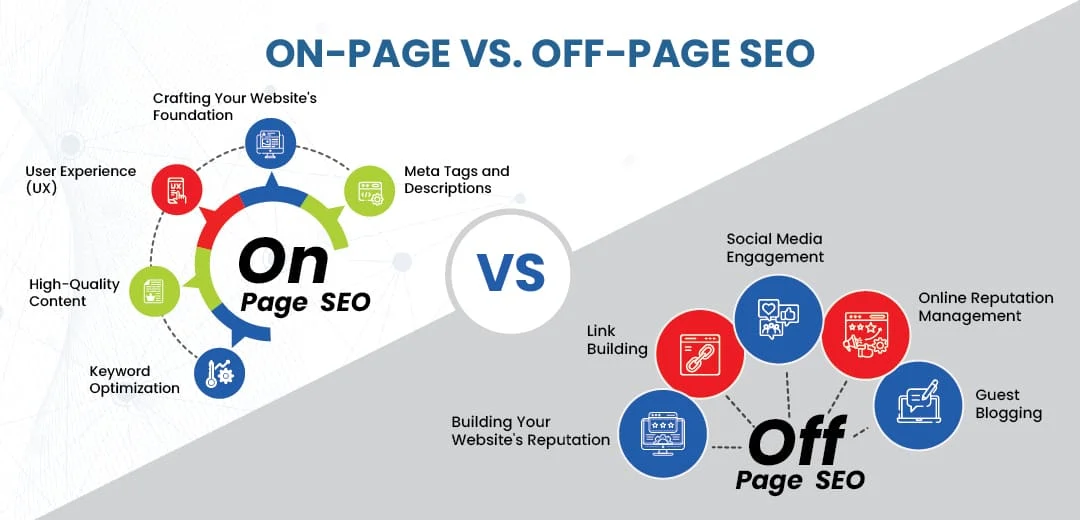
Having the right hierarchy of headings has a part in most aspects of search optimization.
In the case of a business that aims at a location-based search, it is recommended to have a clear H1 like Digital Marketing Agency in Mumbai that will help search engines to determine the geographic value of the page at a glance.
Structured headings in B2B websites allow decision-makers to scan the content fast, enhancing the ease of reading and interacting with long-form pages in the industry.
Although the systems of Google are able to decipher more than one H1 tag, the standard that is used in the industry is still a single H1 per page. This approach ensures:
Most websites have the following structure recommended:
This organization also makes a logical outline that is useful to both the search engines and the users.
The controversy of the multiple H1 tags is frequently due to discrepancy between what can be technically handled by the search engine and what is regarded by professionals as the appropriate practice. The algorithm of Google is sophisticated enough to comprehend pages even in case there are several H1 tags. Yet, hierarchical headings are still important to content structuring accessibility and the user experience.
This is why in the majority of cases, SEO experts suggest having a single main H1 head with organized H2 and H3 headings. This will simplify webpages to search engines, screen readers and those that peruse webpages in quick mode. It does not matter whether it is Local SEO, B2B SEO, Pharmaceutical SEO, or even simple digital marketing the clear structure of the heading will result in clarity, better readability and allow the enhancement of the overall website's performance.
Copyright © 2026 All Rights Reserved By Arsh Infosystems.
Reviews On 
Years experience
Satisfied clients