Komal Saim May 18, 2026


Komal Saim May 18, 2026
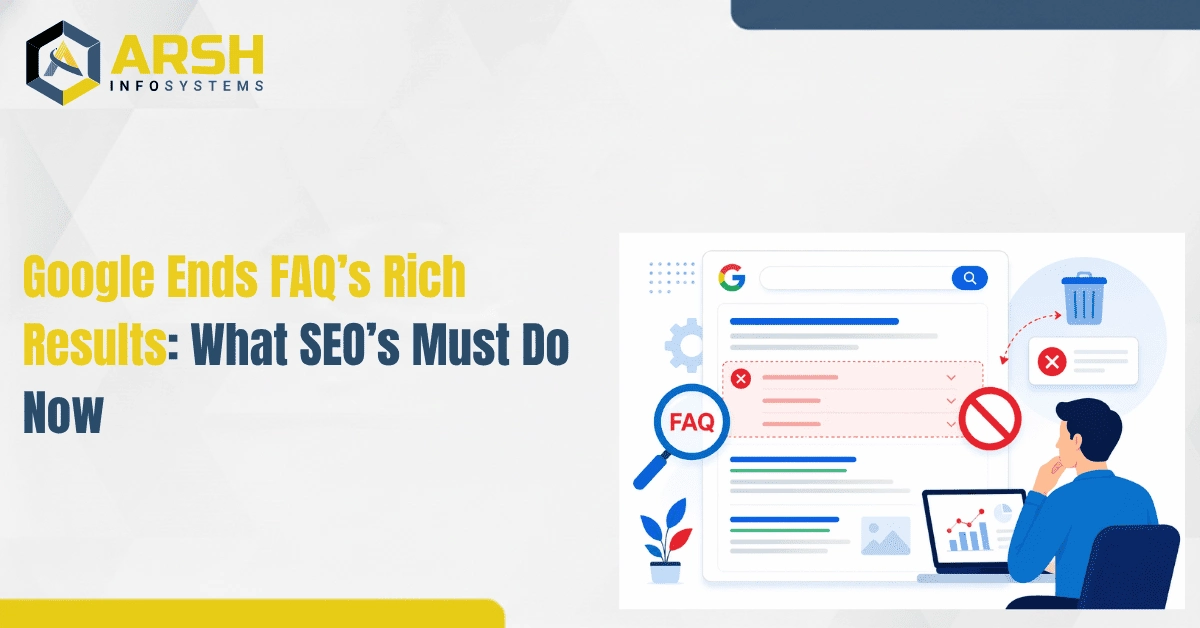
The biggest change to Google's core search over the last few years has been the removal of FAQ rich results from most sites․ For several years‚ SEOs have used FAQ schema to gain more visibility in search engines‚ attract clicks and occupy more space within a search engine results page․ However‚ this era is now one of endings․
Google has limited itself to FAQ rich results exclusively for government sites and health websites‚ which means that businesses‚ ecommerce sites‚ blogs‚ agencies‚ and service providers can no longer create expandable FAQ snippets․
This is good news because it's an improvement in SEO․
At Arsh Infosystems‚ we see this as a clear signal that SEO is moving beyond the technical and focusing more and more on the valuable content‚ trust‚ authority and user experience․
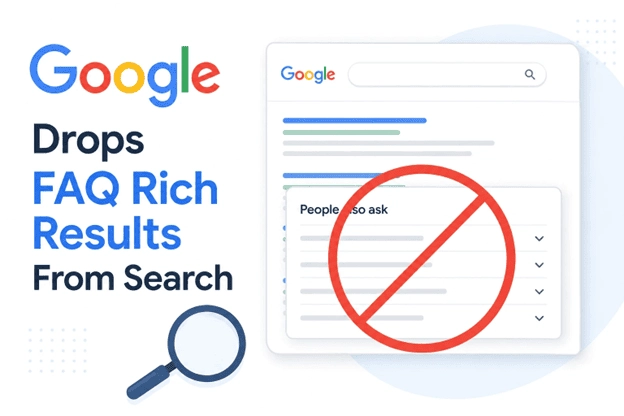
FAQ rich results are improved search engine results that enable webmasters to show collapsible questions and answers in Google Search․ They are made possible by FAQPage structured data (schema markup)‚ which allows Google to better understand the content of the FAQ section of a webpage and display a more engaging result․
If properly implemented FAQ rich results will provide better visibility in search engine results pages (SERPs) than ordinary search engine listings․ Aside from the title and meta description‚ FAQ rich results will provide users with multiple questions and answers underneath the search engine result․
For example‚ a search result for a digital marketing agency may include the questions:
Users could expand these questions within the search results for an instantaneous answer‚ rather than going to the website first․
At first‚ the FAQ schema markup was used to improve searching․ It helped users find what they wanted in a web page‚ by indicating what the page had to offer and improving understanding of the page's content before the user visited․ It became more often used just for search optimization․
Abuse of this feature has caused FAQ rich results to become less useful‚ thus making Google re-evaluate FAQ placement on this page․
Google's decision to reduce FAQ rich results followed an effort to improve the quality of its search results and the user experience for the search engine․
When FAQ rich results were first launched‚ their purpose was to give users some quick answers right in the search results‚ and make it possible for webmasters to present such content in a better way‚ but over time their purpose changed because they became more popular․
Many websites added FAQ schema to their pages simply for the purpose of ranking more prominently on the search results page․ In some cases‚ the questions were generic and irrelevant to the content‚ and were there simply to fill up space on the search results page in order to attract clicks․
As this trend continued‚ it became harder for users to find truly relevant and trustworthy information on search engines․
Here’s how Google’s perspective evolved over time:
| Earlier Purpose of FAQ Rich Results | Google’s Current View |
|---|---|
| Help users find quick answers | Often created unnecessary SERP clutter |
| Improve content understanding | Frequently overused for SEO advantage |
| Increase search visibility | Reduced consistency in search results |
| Encourage structured content | Many implementations became repetitive or low-quality |
| Available to a wide range of websites | Now limited to highly trusted sources |
Another category of low-quality content was auto-generated FAQ pages‚ where either the FAQ pages were automatically generated using AI tools‚ or where the same FAQ was reused on multiple pages‚ creating a situation where all content was of low quality and therefore the search experience was less useful to real people․
As with prior algorithm changes including Google's Helpful Content and spam updates‚ the goal is rewarding high-quality‚ useful‚ trustworthy content with expertise or experience‚ rather than low-quality content․
These FAQ rich results are largely limited to trusted government and health-related websites due to their subject matter‚ where accuracy and trustworthiness are paramount․ This falls in line with Google's overall goal to prioritize content that serves users over content that merely attracts visibility in search results․
The removal of FAQ rich results is not a signal that structured data has no longer any value․ SEO is about delivering real value to users rather than tweaking or improving technical aspects of a website such as page speed or metadata․
Most sites that used FAQ schema were doing it purely for the expanded visibility that is added to the SERP․ With an FAQ rich snippet‚ sites were able to render an expandable FAQ on the SERP‚ effectively taking up more space and potentially gaining clicks for pages with thin content․ That approach is becoming far less effective․
Modern SEO entails producing content designed to meet user demands and adapting to Google's constantly evolving quality guidelines․
Today's SEO focuses on the following aspects:
As Google's search algorithms improve at distinguishing content that delivers value to the users from content that is optimized to rank well in search engines‚ businesses will have to focus less on SEO loopholes and more on building relevant content․
This is a question that comes up often after Google updates and the answer is: yes‚ but only if it serves a real purpose․
If your FAQ section provides helpful information‚ answers important questions or helps an user make a decision‚ you can still mark it up․ Adding structured data helps search engines better understand your content and page structure․
If your FAQ sections are designed only to influence your rank or overstuffed with keywords or content that doesn't actually serve a purpose to your audience then you should reconsider․
The most important question you can ask about a FAQ is whether or not it provides value to an user․
Does this help my users? If the answer is yes‚ keep it․ If the answer is no‚ spend your time creating useful and purposeful content that works well for users and search engines․
Here’s a more refined and professional version of the table:
| Keep FAQ Schema If… | Consider Removing or Updating FAQ Schema If… |
|---|---|
| FAQs genuinely answer real user questions | FAQs are added primarily for keyword stuffing |
| Answers provide unique, helpful, and relevant information | The same FAQ content is repeated across multiple pages |
| The FAQ section improves overall user experience | FAQs were created only to gain SEO visibility |
| Questions align naturally with user search intent | Questions are generic, irrelevant, or offer little value |
| FAQ content is clearly visible and accessible on the webpage | Hidden or misleading content is marked up with schema |
| The FAQs support informed decision-making for users | The content feels forced, outdated, or artificially generated |
Perhaps the clearest message from the latest Google update is that the success of SEO is now less about helping the search engines and more about helping the users․
Don't optimize for SERP features like FAQ rich results․ Rather‚ provide clear‚ credible‚ useful content for your target audience that answers their specific queries or needs․ More generally‚ Google has increasingly prioritized sites that provide users with genuine solutions in an experience-centric fashion․
Instead of adding generic FAQ sections to every service page‚ a solar panel company would provide far more value by publicizing:
Providing this kind of content can be an important part of user experience and establishing topical authority‚ two critical aspects of modern SEO․
Google continues to place strong emphasis on EEAT:
Websites that demonstrate genuine industry knowledge and real-world credibility are more likely to perform well in search results compared to those relying on shallow or purely AI-generated content.
To strengthen EEAT, businesses should focus on adding clear trust signals across their website.
| EEAT Element | SEO Benefit |
|---|---|
| Author profiles with expertise | Builds credibility |
| Industry certifications | Increases trust |
| Real case studies and project examples | Demonstrates practical experience |
| Customer testimonials and reviews | Strengthens authority |
| Regularly updated content | Signals relevance and accuracy |
| Reliable references and citations | Improves trustworthiness |
The fact that FAQ rich results are no longer available does not negate the importance of SEO․ Rather‚ it changes businesses' focuses and priorities for SEO․
Now‚ SEO is mainly about streamlining:
With the rise of AI-driven search products with features like Google AI Overviews and conversational searches‚ content with a clear‚ authoritative‚ and organized response to user queries is becoming more important for search rankings․
To stay competitive‚ content should be optimized for readability and accessibility through:
This helps both engagement metrics and search engine understanding․
Better Alternatives to FAQ Rich Results
FAQ rich results are not widely supported․ Businesses should consider alternative solutions to improve their search visibility․
Some long-term SEO strategies are the following:
Featured Snippets
Having concise formatted answers to frequently asked questions can help with search visibility․
Video SEO
Google is increasingly prioritizing video content for tutorials‚ product explainers‚ and educational questions․
AI Overview Optimization
Creating authoritative‚ question-focused content can improve visibility in AI-generated search summaries․
Image SEO
Well-optimized images with metadata can help ensure search discoverability․
Topical Authority Development
Creating lots of content on topic areas builds up the ranking strength over time․
| Outdated SEO Tactics | Modern SEO Priorities |
|---|---|
| FAQ schema overuse | Helpful, user-first content |
| SERP manipulation | Better user experience |
| High-volume low-value pages | Topical authority |
| Generic AI-generated FAQs | Original expertise and insights |
| Keyword stuffing | Semantic optimization |
| Technical shortcuts | Brand trust and credibility |
Structured data remains a fundamental part of SEO‚ though its purpose is evolving․
Schema markup should be considered a tool to help search engines better understand the contents of a page and not a shortcut to a higher ranking․
Businesses are encouraged to continue using these types of schema:
The goal of structured data should be to improve valuable content‚ not simply to affect the appearance of search․
Google has now deprecated FAQ rich results for most websites‚ resulting in the most effective SEO efforts coming down not to earning extra SERP real estate with technical SEO perfection and other third-party signals‚ but about creating high-quality‚ useful‚ trustworthy content‚ backed by experience‚ that meets the needs of its users․
For brands and SEO practitioners‚ this update mostly redistributes rewards and punishments within the same field․ Brands that build their presence based on quality content‚ strong EEAT signals‚ keyword intent alignment‚ and a strong user experience will do better in organic and AI search engines in the coming years․
Copyright © 2026 All Rights Reserved By Arsh Infosystems.
Reviews On 
Years experience
Satisfied clients