Komal Saim Nov 11, 2025


Komal Saim Nov 11, 2025
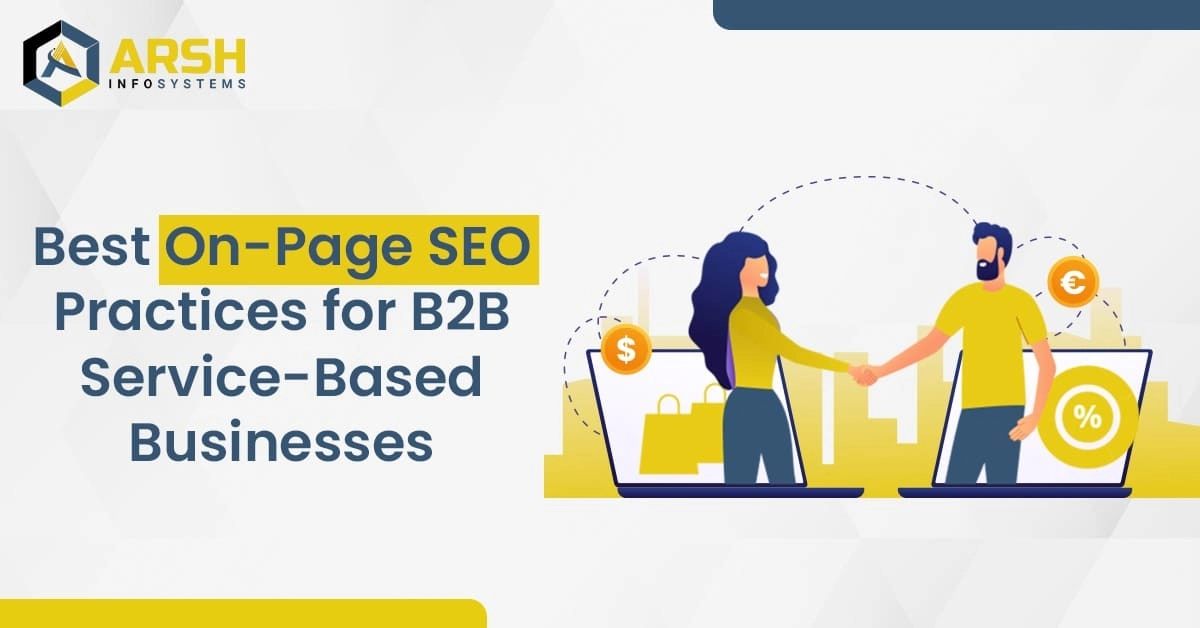
The world of B2B competition has become highly competitive today, and a solid online presence has ceased being a luxury, but has become a necessity for service-based businesses that wish to grow and remain competitive. Contemporary decision-makers in IT companies, the manufacturing industry, engineering, and automation-related industries are strongly dependent on internet research prior to approaching a prospective service provider. Consequently, search engines have become the entry point between the business and its potential customers.
This consumer behaviour change renders On-Page SEO an essential practice among progressive enterprises such as Arsh Infosystems that would desire to stay in the limelight, pertinent, and trustworthy in the online market. B2B buyers also take longer before making a decision as opposed to B2C buyers. They scrutinise various service providers, weigh solutions, analyse technical capabilities and credibility of a firm before deciding on a final solution. In many cases, several stakeholders may be engaged in the process, so the concern of trust and authority becomes even greater.
This is why a business website should do more than make its online presence. It must communicate effectively to its targeted customers, solve their problems, show competence, and offer valuable information that can guide the decision-makers to a closer step in selecting a service provider. The ability to display in search results at the opportune time when potential clients are searching to seek solutions can play a significant role in ensuring that meaningful business opportunities are created.
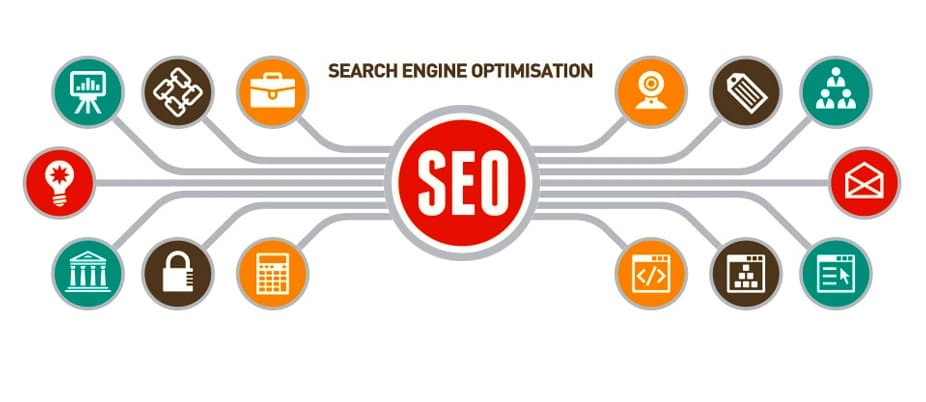
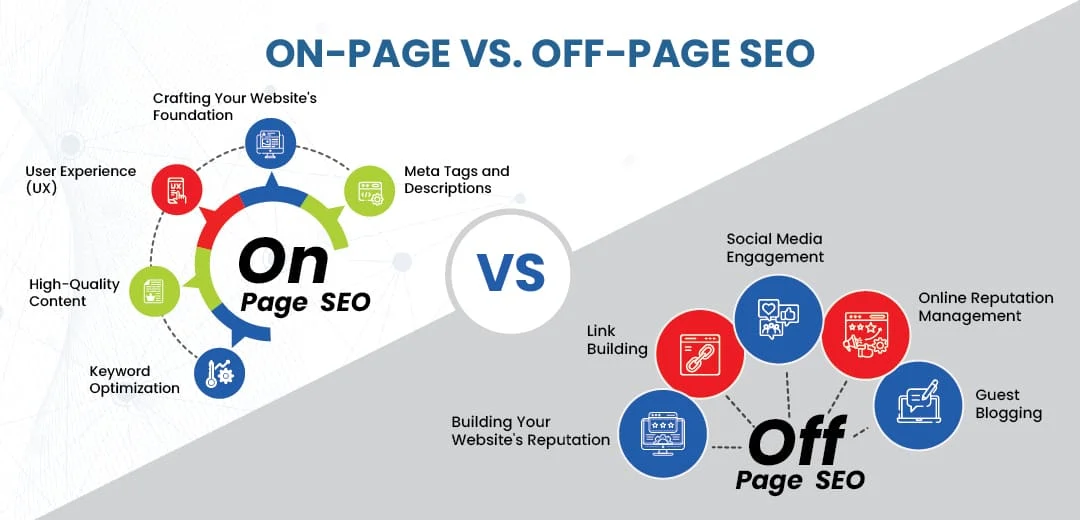
On-page SEO is very critical in determining the success of any digital marketing strategy. It entails maximising the individual webpages in such a way that search engines can have a clear picture of the content of the webpages and introduce it to the appropriate people. Nevertheless, in the case of B2B companies, on-page SEO should be more strategic and considerate.
B2B buyers do not make quick decisions as compared to a B2C customer. Their buying cycle is normally meticulous, where several vendors are evaluated and determined whether a company can really resolve their business predicaments. These people are not demanding inexpensive promotional materials, but they are in need of properly developed, informative, and reliable information that can enable them to make their business decisions confidently.
That is why the search intent becomes one of the most significant aspects of B2B on-page SEO. Instead of focusing on as many keywords as possible or generic ones, it is time that businesses consider queries that are representative of actual buyer needs. These search terms usually mean that a prospective customer is in the process of seeking a solution, services or knowledge on how to address their particular problems.
For example:
As an illustration, B2B buyers can use particular queries that indicate their business requirements, including best IT outsourcing services to small businesses, automation solutions to minimise manual errors, or a managed service provider in the manufacturing industry. Such keywords generally represent a definite purpose of seeking a solution or a service provider. By targeting such search queries, it is possible to attract visitors who would have greater chances of being qualified leads as opposed to casual traffic of the site.
Besides creating the traffic of the relevant nature, B2B on-page SEO has a significant effect on authority construction, which, in particular, is highly appreciated in the B2B setting. Business decision-makers like to operate with enterprises that show experience and trustworthiness. They tend to put their faith in the organisation that presents well-documented information, real-life experience and practical remarks and insights.
With the incorporation of clear content, technical expertise, real-life case studies, and the explanation of the services clearly, a business will be able to place itself as an authoritative partner and not a simple service provider. This also contributes to enhancing search ranking and creates confidence with the prospective clients.
A successful B2B SEO strategy is based on effective keyword research. The B2B searches are more comprehensive and problem-solving, unlike in B2C searches, where the user is usually interested in a fast purchase. IT managers, operations heads, or procurement teams are some of the decision-makers who seek services that will enhance efficiency, save money, or help resolve operational issues.
To conduct a successful B2B keyword research, a business must know the target audience, issues that they encounter and the nature of solutions that they are seeking on the internet. Rather than concentrating on the high-volume keywords, one should target the keywords that represent the actual business requirement and high purchasing intentions. It becomes simpler to gain qualified traffic and create valuable leads when the content you are creating is connected to the exact issues that your audience is searching for.
The initial process of B2B keyword research is to know the problems your target audience is attempting to address. Business decision-makers tend to seek advice on the Internet to find out how they can enhance performance, become efficient or minimise difficulties in the course of the operation. The problems may be readily converted into good search keywords.
As a case in point, firms that seek to enhance their IT infrastructure might browse words such as IT infrastructure optimisation services or enterprise network security solutions. By finding these pain points and producing content on them, the businesses would make sure that their site is visible when potential customers are in an active state of seeking solutions.
The importance of long-tail keywords in B2B SEO is particularly related to the fact that they tend to demonstrate greater search intent. These keywords are more precise and usually show that the user is more likely to make a business decision.
Incorporating an example, a prospective client may not need to search for a generic word or phrase, such as automation services; he or she could search for an industrial automation service provider in India or a custom ERP development company. Such detailed searches are less likely to have high volumes of search; however, they also capture very relevant visitors who have a higher chance of converting into business leads.
The B2B customer usually employs technical or industry jargon to search for the solution. Putting such terms in your text enhances both search engine relevancy and shows that you are knowledgeable in the subject matter.
As an illustration, the process of PLC automation integration, predictive maintenance systems, or optimisation of SCADA systems, are common words among manufacturing or automation sector professionals. These technical terms, when added to your content naturally, will send an indication to the search engines or customers that your business is fully aware of the industry issues.
B2B buyers do not always immediately search for service providers, but they start with research of the solutions. Keywords that are education and research-oriented are used to draw the attention of these users at the initial stages of the purchasing process.
Such searches are how to improve production efficiency or the benefits of cloud-based ERP systems. The content created based on these keywords (blogs, guides, industry resources, etc.) not only ensures that your potential clients are educated but also contributes to the credibility and authority of your brand.
Trust is significant in the purchase decisions in the B2B world. At best, firms do not select a service provider after using one site. In their place, they critically examine the experience, expertise, and previous work of a company and then make a decision. This is the reason why B2B businesses must develop quality, authority-creating content.
Good content does not merely state services. It proves that you know, offer insights and also shows how your company has been effective in assisting other businesses to solve their problems. As long as possible, customers get what they find useful and informative on your webpage, they will have more opportunities to perceive your company as a reliable partner than as another provider of the service.
One of the best methods in order to create credibility in B2B marketing is through case studies. Case studies are not merely described as explaining what your company does, but they give concrete examples of how your solutions have helped your clients in solving issues and attaining quantifiable outcomes.
A good case study normally starts by stating the problem that was being experienced by the client. This may be delayed production, ineffective systems or old technology. Then, there is a description of the strategy and solution that was adopted by your team to solve the problem.
Lastly, it points to the outcomes achieved once the solution is put in place. These outcomes may be in the form of high productivity, less downtime, better operational efficiency or cost reduction. When these quantifiable results are observed by the prospective clients, they will feel confident about your capabilities of providing these results to their enterprise.
Another significant element of B2B on-page SEO is service pages. These pages are to give a clear and elaborate explanation of what your company offers. They must explain how the service works, in what industries it applies and what outcomes can be achieved for clients, rather than merely enumerating the services.
The expertise is also noted in a well-written service page as it describes the technologies, tools or processes of delivering the service. This aids in creating awareness among potential clients about the worth of your solutions and establishes credibility in your abilities.
The significance of educational blogs and guides is huge in terms of drawing possible clients who are researching solutions online. Most B2B buyers start with a search that seeks information to assist them in defining their problems and seeking solutions.
Production of useful content- how-to instructions, industry information, problem-solving articles, etc. makes your business look like an informed and trusted source. To illustrate, a blog about the benefits of automation in enhancing the efficiency of manufacturing or about the role of ERP systems in managing expanding companies can appeal to decision-makers who are in the process of conducting research.
Such content can gradually produce authority as well as enhance the visibility of your site in search engines. It also opens prospects to turn readers into potential leads when they become willing to visit service providers.
Although it is essential to attract traffic with the help of SEO, the end product of a B2B web page is to transform visitors and leads into prospective customers. That is why the contents of your websites should steer the visitors to the next stage of their purchasing process.
Making your value proposition unique is one of the strategies that is important. The decision makers would like to understand the reason why they should select your company among others. You should explain the value of your services to the visitors by showing them the value of using your services through clear explanations that it can be more efficient, save money, or be implemented faster.
The other significant factor is the inclusion of trust signals like testimonials, certifications, client logos and case studies. These factors demonstrate to potential clients that your company is trusted by other businesses, and it can bring in a great deal of credibility.
Lastly, your site must also contain obvious calls-to-action (CTAs) helping direct visitors with the need to reach your team, ask about a quote or a consultation. By being able to follow the instructions given on what to do next, the visitors will have a higher likelihood of becoming qualified leads.
The type of search results of your webpages is also a major issue with meta tags. Firstly, when your page is shown in Google, users are able to view the meta title and the meta description. They are applicable in terms of familiarising the search engines and the people that visit your page with what your page holds.
A good meta title should be a good combination of your keyword and yet read and comprehend smoothly. It needs to be informative about what the page is about and attempt to make the users click. Metadescriptions will consist of just a summarised review of the worth of the page and must indicate how the page will be of help to the reader.
In B2B business, effective meta tags can help the business be considered as having high rates of click-through because, in most scenarios, the decision-makers are seeking solution-oriented messages. Users can prefer your site to that of your rivals in terms of a title and a description that display competence and relevance.
There are also header tags which are used to organise your content and make it easier to read and understand by both the search engines and the readers (H1, H2 and H3). When a page is well designed, it is easier to read and allows a visitor to find the information they want in the shortest time possible.
The H1 tag is expected to be the main theme of the page, and it usually contains the keyword. The H2 tags and then the H3 tags assist in the division of the content into major parts and then smaller parts, respectively, with more details.
Clear headings make it easy to digest the information, as the B2B audience that leans toward the tendency to scan the information fast will be helped in assimilating the information. Meanwhile, the search engines can use these headings to understand how and when your content is ranked and useful, which may positively impact rankings.
Internal linking is a simple but efficient technique of search engine optimisation that helps one to interlink different pages on their website. Content-related links enable the visitor to continue reading further on the information, as well as allowing the search engines to have an idea about how your website is organised.
The automation manufacturing blog might serve as an example; it may be connected to your automation services page or to a case study regarding the subject. This keeps the users amused and takes them a longer time to navigate on your site.
Interconnection of the pages in the site also helps in sharing the page authority in your site. It can make other pages more visible and increase their search rankings by linking high-performing pages with them. An effective internal linking strategy will be appropriate to create a fine content framework that will not only suit the users, but also search engines, in the event of multiple services and resources present in the B2B sites.
You can use photos to make sure that your site is more appealing and less complex for the reader,r and also to explain the complex technical concepts. However, large or non-optimised images can cause slowness of your site, and consequently, it can influence user experience.
The images should be squeezed so that they improve the performance without affecting the quality. The descriptive file names and the alt text also assist the search engines in knowing what is in your pictures. This can improve your exposure in picture search results and also the overall search engine optimisation.
An optimised image not only makes your page faster, but it also makes your website look more professional and persuasive. The potential clients can have more information on the technical aspects elaborated with the use of vivid content through graphics such as diagrams, charts, and infographics.
The majority of the business population can now access websites through different devices, including desktops, tablets, and mobile phones. When the site is slow or fails to deliver a good experience on the mobile platform, potential clients will abandon it and fail to consider your services.
A mobile-friendly and fast-loading site improves the aspect of user experience and is an important factor in search engine rankings. Google focuses on the websites that make all devices easy to use.
Good hosting, effective code and optimised images can significantly enhance the work of the site. The dynamic design implies that whatever you are writing would be easy to read and easy to follow, anywhere you are, of any size, to ensure that your visitors remain longer.
It is not simple to ensure that traffic is drawn through the use of SEO. The real objective is to convert such traffic to business enquiries or business leads. It is with this that conversion optimisation is what you would desire to incorporate in your on-page search engine optimisation strategy.
The people who visit your site must be guided to some sort of definite activity, such as a quote request, consultation or downloading of a resource. The simplified navigation, clear information and properly placed call-to-action buttons are some of the same features that lead to greater capacity of the visitors to continue the action.
With the example of B2B business, the visitors can also be encouraged to leave their contact information by such resources, such as case studies, industry reports or downloadable guides. These messages will help in turning the traffic on the sites into qualified leads that will later become regular customers.
SEO is not a one-time task. The search engines' algorithm, industry trends, as well as the customers' requirements continue to evolve, and this means that your content has to be updated at a constant pace of time to become relevant.
Such tools as Google Analytics and Google Search Console will help to track the performance and understand what pages are doing great and what should be improved. Another method of keeping or gaining improved search places is to revise outdated material with newer data, further clarifications, and keywords.
You should also update your material on a regular basis to give a message to the search engines that your site is in operation and worth visiting. When the case is B2B enterprises, it should not be forgotten that the content should always be updated so that the decision makers can never miss good and reliable information, the moment they are researching your services.
In the present-day competitive business-to-business environment, the website must be optimised to reach the targeted audience and build long-term relationships with business partners. On-page SEO is highly helpful and useful in helping service-based firms to improve their presence in the search engines, to prove their proficiency and provide valuable information to potential consumers. The more your website has been developed using the right keywords, good content, a simple navigation system and good technical performance, the more the decision-makers are discovering and trusting your brand.
The businesses are able to build a good online foundation by addressing the key requirements such as strategic keyword research, useful content, optimised meta tags, internal links and a website that is fast and mobile-friendly. These not only use them to improve search positions but also to improve user experience and direct visitors to an important action.
Copyright © 2026 All Rights Reserved By Arsh Infosystems.
Reviews On 
Years experience
Satisfied clients