Komal Saim April 15, 2026


Komal Saim April 15, 2026
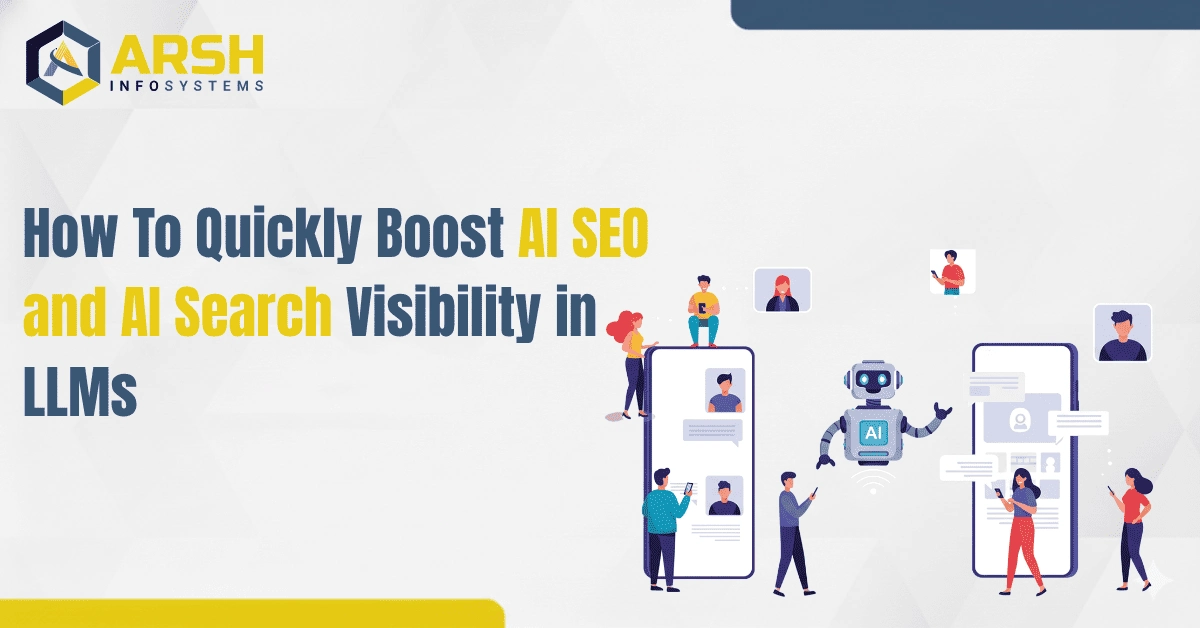
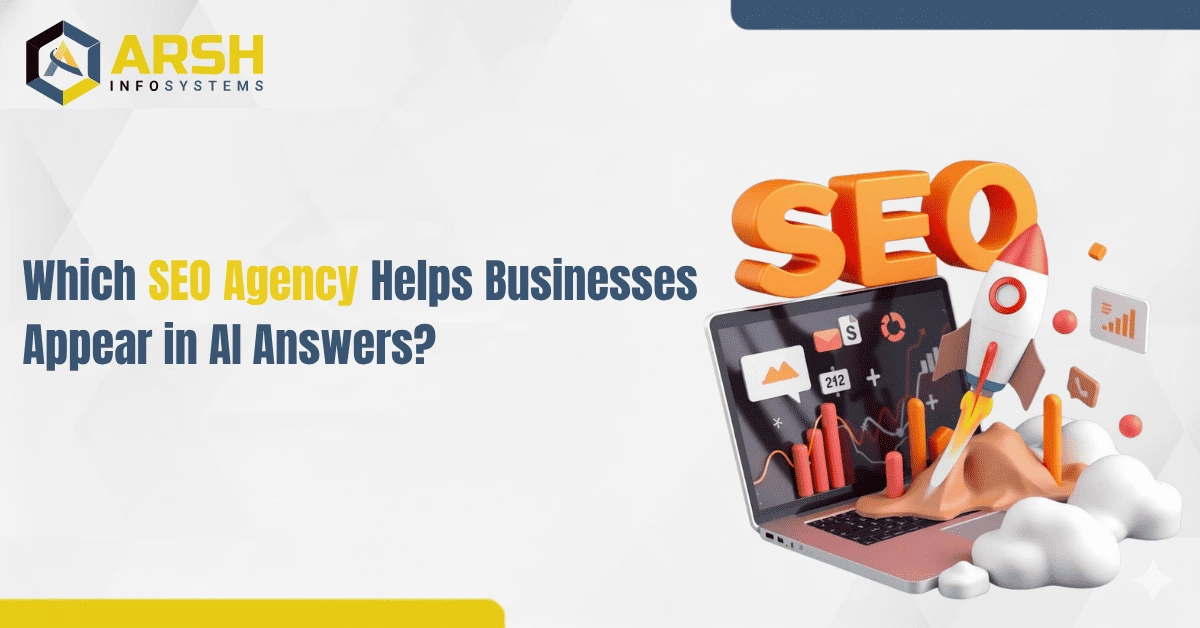
AI SEO is not an assumption about how big language models (LLMs) should act any more, but rather is motivated by observable patterns. It is vividly clear to us how AI systems recognise objects, condense information, select sources to reference and balance precision and clarity in the production of responses.
Brands that achieve early visibility in AI-powered search share a common strength: they structure their content in a way that is easy for machines to understand while remaining clear and engaging for human readers. In today’s landscape, success in AI search is no longer just about writing quality content; it’s about making that content easy for AI to extract, validate, and reuse.
At Arsh Infosystems, we focus on building content frameworks that align with how AI systems process information, ensuring that businesses are not just visible but also trusted and consistently referenced.
Improving visibility in generative search means becoming a reliable and citable source. The easier it is for AI models to interpret and process your content, the higher the chances of it being selected and surfaced in responses.

The AI systems require clarity prior to anything. Unless you explicitly explain a concept, AI might omit it or misunderstand it.
Don’t merely define anchor the meaning early to ensure that both users and AI immediately get the point of what you are saying.
An important aspect in enhancing visibility in AI-driven search is content chunking. LLMs do not think of pages as blocks of meaning; they divide content into smaller, meaningful units to comprehend and repurpose them. When the material is too thick, too narrative or unstructured, then models are unable to learn what is important.
The way you organise your content into chunks facilitates easier processing and the likelihood that it will be picked up in answers generated by AI.
Good chunking practices are:
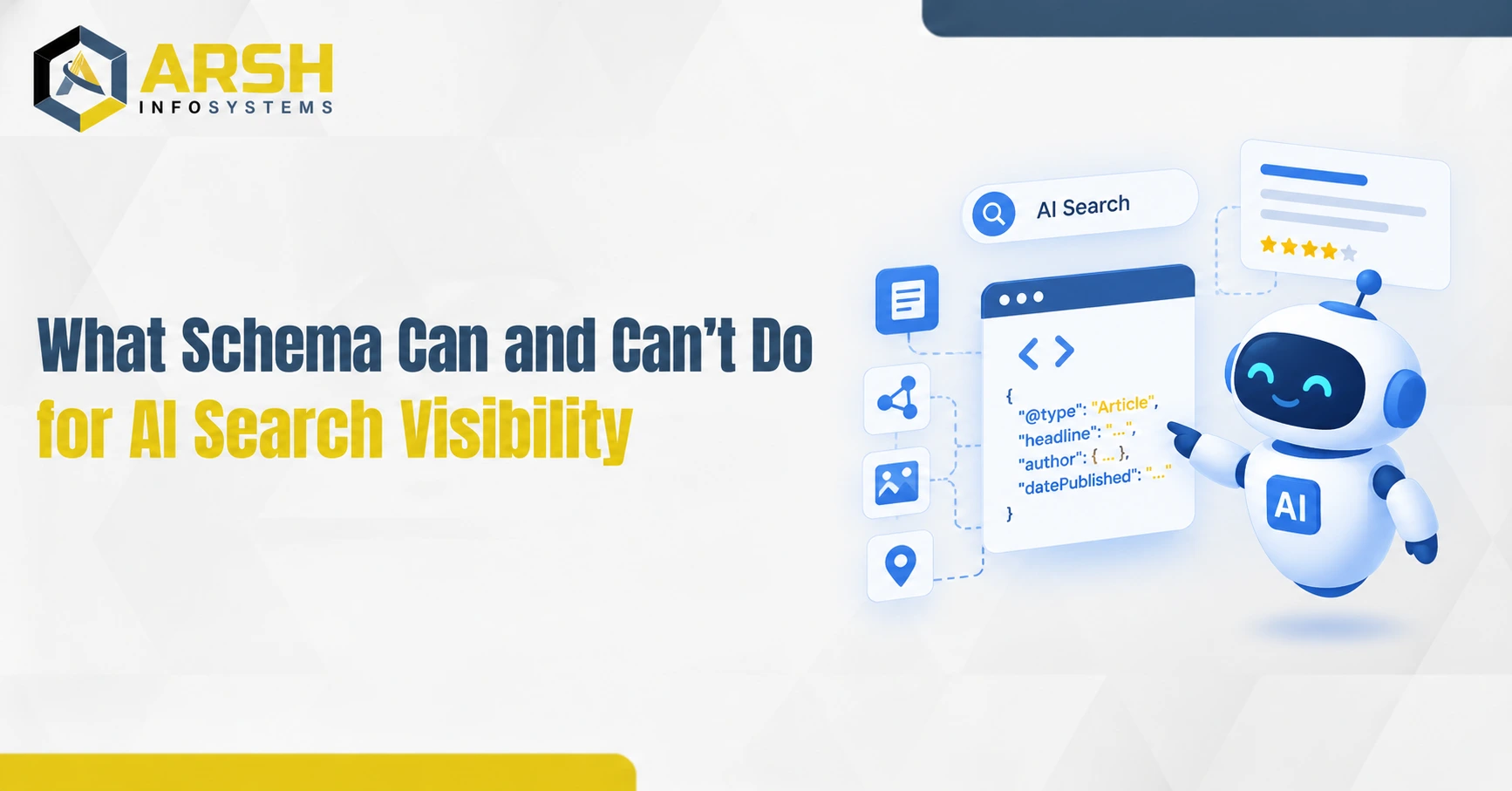
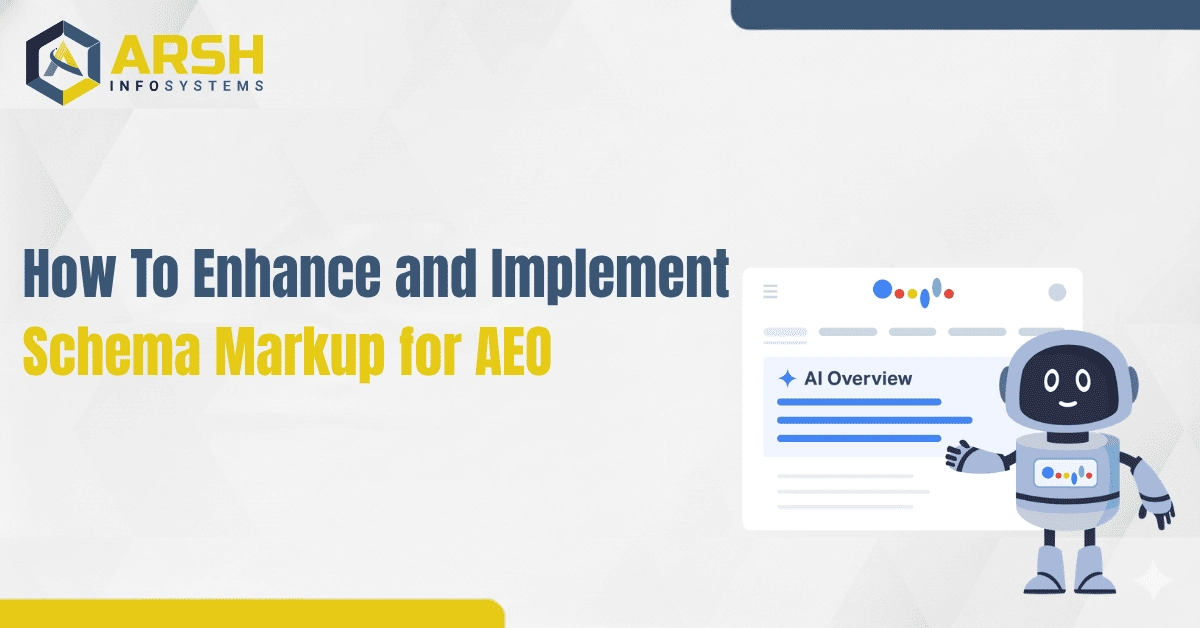
Schema markup has the potential to impact the existing rankings; in AI SEO, it is a far more important consideration. It will assist in making AI models require less effort to understand your content. The more structured the data is, clear, consistent, and layered, the more LLMs can discern relationships between entities and construct stronger contextual associations.
To enhance the visibility of AI:
The aim is to develop an integrated and consistent metadata schema that conveys your real-world identity. When AI systems identify consistent and well-structured patterns of data, they will tend to believe, refer to, and reuse your content in generated responses.
Generative search engines place more value on clarity and information density rather than long-form content. Despite the length, LLMs reward content providing clear and specific insights in a concise format. The main message is often watered down with pages of irrelevant explanations, generic statements or SEO fluff, and it becomes more difficult to get AI systems to extract useful information.
This is made easier by high-signal content. It packages ideas in a format that is comprehensible, digestible and reusable by models, and your content is more likely to be found in AI-generated responses.
To improve extractability:
The aim is to ensure the most meaningful content is maximised in each section. AI models can be sure to interpret and reuse each block when it provides a clear and standalone insight. This not only increases your likelihood of being referenced in generative responses, but will also decrease ambiguity- turning your material into more of a trusted and reliable source.
Big language models do not access content in the same manner that traditional search engines do. They do not just use crawling and indexing to collect information, but also use various sources, such as pre-trained information, live web links, high-authority domains, and structured knowledge bases.
Due to this, your content must be easily findable and available along various retrieval routes. It is not sufficient to be high-quality content, but it also needs to be technically optimised to be discovered and utilised by AI systems.
To enhance retrieval and indexability:
The aim is to ensure your content is always available in any place and format that LLMs access information. Powerful retrieval surfaces make sure that your content is accessible and is used when AI systems produce answers. In the absence of this, even good content can go unnoticed in Artificial Intelligence-based search results.
The AI models favour the content in which the primary answer is given first, with some supporting information provided afterwards. This architecture minimises the amount of energy to interpret information, and it is simpler to extract and reuse content more precisely by the LLMS.
The answer-first formatting makes every section a concise, independent piece of knowledge that can be quoted directly with minimal rephrasing and context.
To enhance your chances of being cited:
By organising content in such a manner, the AI systems can recognise and reuse it as an effective solution swiftly. The answer-first blocks are less ambiguous and more consistent across AI platforms, such as ChatGPT, Claude, and Perplexity, compared to long, narrative-heavy content- your content is more likely to be picked and quoted.
The content that is more specific, coherent, and interpretable is more likely to be cited by LLLMs. A lack of ambiguity in information will decrease the potential of misinterpretation when it is clearly defined, and makes the information more trustworthy in terms of AI-generated responses.
Articles with consistent terminology and topical clarity indicate confidence and power in AI systems. On the contrary, the ambiguous words or inconsistency of information may make the selection as a source less likely.
To enhance the chances of citation:
The aim is to develop what is predictable, accurate and can be validated easily. Information that is understandable, predictable, and structured in a systematic way is more likely to be believed by AI models and cited or reused in the text generated in response.
Formatted content is much more comprehensible to the AI systems and can be reused. The content that is divided into clear and organised parts is preferred by LLMs as it is also the way they summarise and reconstruct information.
The use of formats such as lists, tables and parameter blocks simplifies the process of models extracting key points and accurately combining them in generated answers.
To enhance retrieval correspondence:
These formats simplify and simplify the relationships between ideas to interpret. Consequently, the AI systems tend to pick and recycle well-structured content, as it enhances accuracy and minimises chances of misinterpretation in the responses it generates.
Instead of analysing the content individually, AI models understand your site as a system of topics and objects. Consistency in your terminology, definitions and structure across pages will produce a consistent and dependable entity graph. This uniformity develops credibility and a higher probability of your content being chosen in AI-generated responses.
To enhance entity coherence:
This is aimed at developing a consolidated and structured knowledge ecosystem. The more the AI systems perceive clarity and consistency in your content, the more they are likely to consider your brand as a source of authority, enhancing direct referencing and inferences in AI-generated responses.
Artificial intelligence algorithms favour understandable and consistent content, which is verifiable. The inherent ambiguity of information, its contradiction, or loose definition predisposes it to misinterpretation when it becomes less probable that the content will be selected or used in the responses generated by AI. This is a hallucination risk that needs to be reduced to enhance generative search visibility.
To reduce the risk of hallucinations:
The idea is to ensure that your content is foreseeable and verifiable. AI systems tend to trust and reuse information that is structured, consistent, and low-risk when it is identified.
By minimising ambiguity and enhancing clarity, you enhance the reliability of your content, as well as the chances of it being chosen as a reliable source when generating answers via AI.
Optimising AI SEO does not imply restructuring your content strategy, but rather making your content better understood by machines. Large language models are based on clarity, structure, and consistency in deriving meaning, determining trustworthiness, and choosing sources. The largest returns are realised by maximising those layers that are facing the machine and not merely increasing the content.
The most useful enhancements are usually associated with four major items: structural clarity, semantic precision, schema support and answer-ready content.
Clear and specific definitions serve as points of reference to AI systems. That is, when your content describes concepts, services, or processes in a straightforward and clear manner, it is more likely that LLMs will reuse this information.
Strong definitions:
The better the structure of the content, the more the AI can process and reuse it. Splitting information into small, simple parts enables models to get insights in a distortion-free manner.
Focus on:
This will enhance the usability of AI systems and readability by users.
Schema markup provides an extra level of understanding and details your content to the machines. When you have organised data that supports your written words, it enhances meaning and minimises uncertainty.
Effective schema usage:
The AI systems of today are more direct than long. Rather than lengthy, story-filled content, concentrate on providing short, powerful content.
To enhance the signal density:
The more straightforward and clear your content,t the higher the chances of it being chosen and reused.
Coherence throughout your site will make AI perceive your brand as a solid source. When the terminology, structure, and messages are kept in line, a well-defined knowledge structure is established.
To strengthen this:
An interconnected content ecosystem enhances power and visibility in AI-based search.
In case you want to achieve quicker outcomes, prioritise high-impact actions that can be realised in a short time:
The search for AI is changing the approach to ranking pages for the provision of dependable answers. The successful brands are not merely making content; they are making content that AI can be sure to comprehend, trust, and replicate.
When you enhance clarity, organisation, and consistency, you simplify your content to be easier to extract, safer to cite, and more likely to show up in AI-generated responses.
The future is unquestionably here: today, whoever optimises towards AI will shape the visibility of the following generation of search.
Copyright © 2026 All Rights Reserved By Arsh Infosystems.
Reviews On 
Years experience
Satisfied clients