Komal Saim March 10, 2026


Komal Saim March 10, 2026
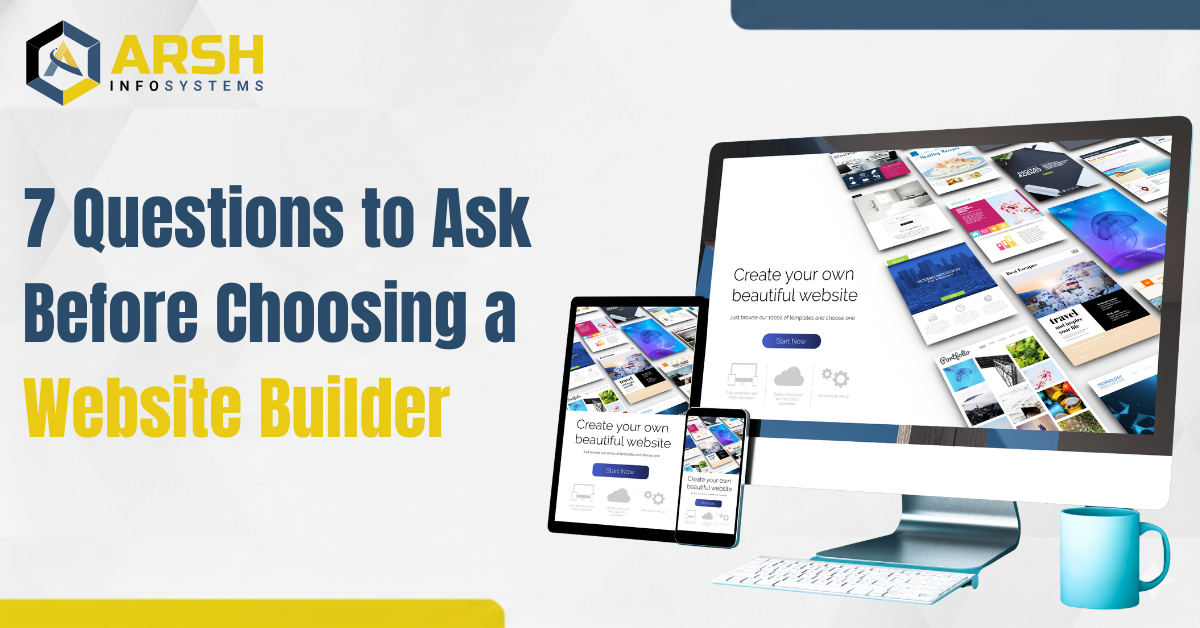
Another important point is that by 2026, starting a site should not be overwhelming but exciting and full of possibilities. There are nowadays a plethora of website builders all promising to be the simplest, the quickest and the most powerful, not to mention that it is hard to determine which one you will need. Although the alternatives are excellent, the wrong platform may result in time wastage, unjustified costs, insufficient customisation, and perpetual frustration.
An excellent website is not simply an internet presence. It displays your brand name, user experience and business credibility. This is why it is necessary to select the appropriate website builder and pay attention to the need to approach professional webdesign at first. The proper platform will enable you to develop an attractive design, a well-functional design and will help you to expand in the future as your company grows.
You should also take a little time and consider what you need before deciding on which website builder to use. Different needs are involved in every business or individual; one might be interested in flexibility in design, other businesses will require high-quality SEO or B2B facilities, or it might be easy content management. You are likely to have a platform that is restrictive to your website without clearly defining your goals.
Answering 07 key questions before the selection of a web building solution will help you to prevent making expensive mistakes and make a sure choice. These are the questions that enable you to consider aspects of design customisation, scalability, search engine optimisation, ease of use and maintenance.
The right decision made now would turn your site into an effective digital property - one that brings in traffic, inspires confidence and helps your business to grow over the next several years.
This is a question that, on the face of it, is quite a basic question; however, when it comes to the establishment of a website, it is one of the most vital steps that many businesses ignore. It is essential to determine the purpose of the website before deciding what platform to use or even specifying what to do with web design before deciding which to use. Is it supposed to highlight the services of your company, create B2B leads, display your portfolio, or emphasise your long-term digital marketing plan?
A website, in the case of B2B businesses, is sometimes not merely an online brochure. It serves as a lead generation device, a reputation-builder and a hub of your brand online. Regardless of whether you are a consulting firm, a manufacturing company, a SaaS platform, or a digital marketing agency, your site must be created in such a way that it appeals to the decision-makers, makes your users aware of what you offer, and it helps to turn visitors into potential clients.
The purpose of your site will have a great impact on the kind of platform and the way you design your website. A system that is good for personal blogging might not have the professionalism of a business website. Likewise, a basic website that is a portfolio may not deliver the features required in service pages, case studies, or lead capture forms.
In the case of a B2B business, it may be a big difference to resort to a business-to-business web development company. These firms realise the significance of features such as architecture that will be search engine friendly, lead generation form, CRM integration, fast loading pages, and scalable website design that will accommodate long sales cycles. WordPress platforms can be commonly used with B2B websites due to their flexibility, customisation, and high-ranking search abilities.
The future growth should also be considered. Your site should not be designed solely to suit your present intentions but also to assist in your plans for the future. In this case, one example is that you might want to add a blog to enhance SEO, release case studies to gain credibility, and combine marketing tools to foster leads. The benefit of selecting a scalable platform is that your website will be able to grow along with your business without the need to rebuild it completely down the line.
It should also be noted that when selecting a website builder or a platform, one should consider the extent of control and customisation they require. The tools of web development typically exist on a continuum. At one end are drag-and-drop builders, where one can build pages by just dropping elements such as pictures, text, and buttons in the precise places you want without even typing a single line of code. At the other extreme are completely customizable platforms, to which developers can tweak layouts, functionality, and design elements at a more detailed level by code and higher-order tools.
The correct decision will greatly depend on your technical expertise and long-term site purposes. When you lack technical experience, it is possible to pick a very complicated platform that needs knowledge of code, like HTML, CSS, or JavaScript, and feel frustrated and slow down with the speed of your progress. Although such platforms have strong functionalities, they can be hard to control unless the appropriate skills are possessed.
Nevertheless, total simplicity is not necessarily the most effective answer as well. In case your business needs a complicated design, a tailor-made feature, or a connection to other business systems, then a simple drag-and-drop builder may be limiting in the long term. Due to the increased functionality or growth, businesses may require flexibility in layouts, performance tuning, integrations with marketing tools, or other functionality.
In the case of most businesses, a system of platform that is simple and yet flexible is the best option to take. The new website systems are able to manage even more sophisticated technical work like security maintenance, web hosting and optimal performance and at the same time enable you to create colours, fonts, layouts and other important features without having to touch any complex code.
This balance will enable you to control the way your website is designed, user experience, and branded and still make the site easy to manage and grow in the future.
In the case of a website builder or platform, a lot of businesses will look at the price that is advertised monthly. But the actual expenses of maintaining a professional site can be well beyond that amount. What might seem like a low-cost platform initially may turn out to be much more expensive as one gets to need new features and services.
Your domain name is one of the initial things to be considered. The professional B2B site must also be running on a custom domain, e.g. yourcompany.com. This creates credibility and builds brand identity. Other site builders provide a complimentary domain in the initial year, whereas there are also those that charge independently.
Professional email hosting is another critical consideration for B2B companies.
Email addresses: amrutaa@arshinfosystems.com
or sales@arshinfosystems.com
contribute to developing a sense of trust among the prospective clients and partners. It is advisable to use a branded email as opposed to a generic Gmail or Yahoo email address since it makes your business look more professional and trustworthy.
Hidden add-ons and upgrades of features should also be monitored. As a case in point, certain sites will charge to take their brand name off your site, provide you with more sophisticated analytics, add marketing capabilities, or provide more storage and bandwidth. These extra costs may be rapidly increasing as your business expands.
In the case of B2B companies, where the products or services are sold in the online environment, another factor of importance is the transaction fees and integrations. Other platforms also charge percentages on each sale or demand a paid integration with the payment gateway, CRM software, or marketing automation software.
The total annual investment is to be calculated instead of the monthly fee in order to make the best decision. Add the prices of your domain, business mail, premiums, and integrations, as well as potential transaction fees. A platform with a slightly increased price that has the necessary features might, in fact, be more cost-efficient and scalable to a developing B2B business.
The use of mobile devices is taking over internet accessibility among people. Actually, over 65 % of web traffic is using smartphones and tablets. When your site does not appear well or is slow to load on smartphones, you can easily lose a significant share of your would-be customers even before they get to read your content or buy your services.
Most current website constructors say they are mobile-friendly, but the question is how well they would work with the various devices. The most advantageous platforms have full responsiveness in the web design and that is your site automatically reacts and adapts its design, image and text to suit any size of the screen, big desktop monitor, tablet or small smartphone.
Ambiguity. Before selecting a website builder or platform, one should test the mobile experience itself. Most of the platforms are free to test and you can create a sample page and see how it looks on various devices. Go to your phone, open the test page and check the experience. Can the text be read without zooming? Do the navigation buttons tap easily? Are there proper images that do not require them to be cropped or distorted? A hassle-free mobile experience will provide visitors with an opportunity to deal with your site comfortably.
Mobile page speed is another important variable. Users of mobile devices usually have a low network connection and thus a site that takes a long before loading can easily send away traffic. It has been found that when websites take over a few seconds to load, the site may lose a large percentage of the visitors even before the webpage loads.
To businesses, particularly the B2B firms, a quick and interactive mobile site enhances user experience, greater engagement, and improved ranking in the search engines. When selecting a platform, it is crucial to make sure that it focuses less on desktop features and more on mobile performance so that your website is both accessible, professional, and efficient to the user, regardless of the device used.
Most of the businesses always start with the business needs at hand when they are starting the websites. Nowadays, you might be satisfied with a few pages of a simple site. But what will you do when your business expands in the coming years? When your team grows, so does your service and a great deal of traffic, then your web platform should be capable of expanding with that level of growth.
Other website builders have your content firmly sealed in their system. This implies that in case you change your platform in future, you might be forced to recreate your entire site. Conversely, superior platforms enable you to take your content in a structured format, which is simpler to transfer to your website or engage a professional web development firm at some future date.
The other important consideration is scalability. When your site is all of the sudden flooded with traffic as a result of marketing efforts or a viral piece of content, the content delivery system must have the capacity to support the new onslaught of traffic. Given that some platforms fail when heavily trafficked, they may be forced to record slow performance or even crash when this happens, at the most inopportune time.
The upgrade possibilities of the platform should be considered as well. When you have the lowest plan, look at the plans at the next level. Will they add helpful advanced features with the development of your business, or is the platform limited to some level of development? Using a platform that has a definite upgrade route is a good option, as your website can expand as well as your company.
Technical problems may occur at any given moment. Think about when your site is down in the middle of the night, or you are unable to get an important update made within a deadline. Under these circumstances, effective customer service is highly appreciated.
Different website builders are of varying quality in terms of support. Other sites offer 24/7 services via chat (live chat ), telephone, or email. The rest can only provide email support and this might require several hours or even days before it is responded to. This is bypassed by premium plans in certain situations, where only users can be provided with advanced customer support.
To make sure that the support is available, it is a good idea to test it during the trial period before supporting a platform. A simple question can be asked and pay attention to how fast they react and how helpful their answer is. Their help documentation should also be reviewed. Good websites offer clear instructions in the form of succinctly written guides, search engines, and video instructions on how to do complex activities.
The forums of the communities can also be quite helpful. There are numerous forums with active communities of users who assist one another in solving issues. In most situations, you are likely to have solutions in the mind of someone who has already encountered the same.
Your site will not be a stand-alone site. The majority of businesses are dependent on numerous programs like email marketing programs, analytics programs, social media programs, customer relationship management (CRM) programs, and accounting programs.
A good website building tool will mingle with the tools you are already using or are about to use in the future. Failure to have appropriate integrations can make you spend a lot of time moving data manually or even spend more to have a custom development.
Preparing a list of the vital integrations before choosing a platform. You can, say, reach out to email marketing services, such as Mailchimp, monitor your traffic with the help of Google Analytics, or spread your message via Instagram and other social media tools.
Payment gateways are also important in case your website has an e-commerce feature. Ensure that the platform accepts the use of common payment systems like PayPal, Stripe or any other payment systems that are accepted by your customers. Another crucial aspect is to verify whether the platform imposes extra charges on such integrations.
On the one hand, some website builders provide big app marketplaces with thousands of integrations; on the other hand, they specialise in offering fewer necessary tools. Both of them can be effective based on what your business requirements are, as long as the platform can facilitate the tools that you value most.
Final Thoughts
Selection of an appropriate website builder does not imply the process of the most popular one. It has been more of a choice of the platform that will suit your business goals, technical skills, financial capabilities, and plans.
The platform that you choose should be well thought out to assist you in realising your growth, provide good customer service, and be readily integrated with the tools that you use. By keeping these in mind, you can be able to create a website that can not only meet your current needs, but also be useful in your future business success.
Copyright © 2026 All Rights Reserved By Arsh Infosystems.
Reviews On 
Years experience
Satisfied clients